Over 1.2 million students enrolled in US public high schools took one or more advanced-placement (AP) exams in 2024. 79% of American public high schools now offer five or more AP classes for students to take. AP classes offer opportunities for students to challenge themselves and prepare for secondary education by taking college-level classes for free in high school. If they score high enough on the AP exams, they have the potential to earn college credit, saving them money. Another motivation for students to take AP classes is college resumés.
With the plethora of resources available to students in the modern age, it seems like getting good grades is becoming more attainable. Many selective colleges and universities are raising the expectations for students applying from simply maintaining a solid grade-point-average (GPA). Students are expected to take more hard classes, perform better and maintain passion in their extracurriculars. According to the Elite Educational Institute, the average number of AP classes taken by students admitted into highly selective schools is between seven and 12. For medium selective schools, it’s around four to eight and for the least selective, around one to five.
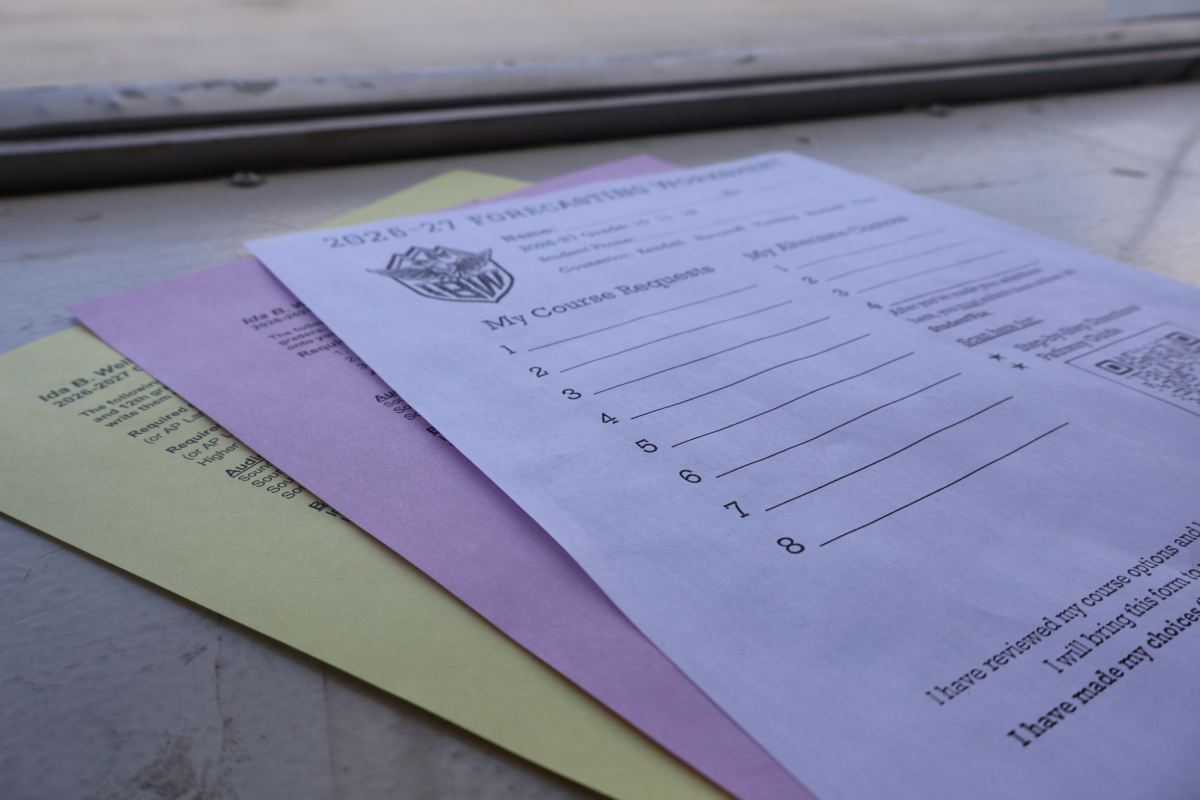
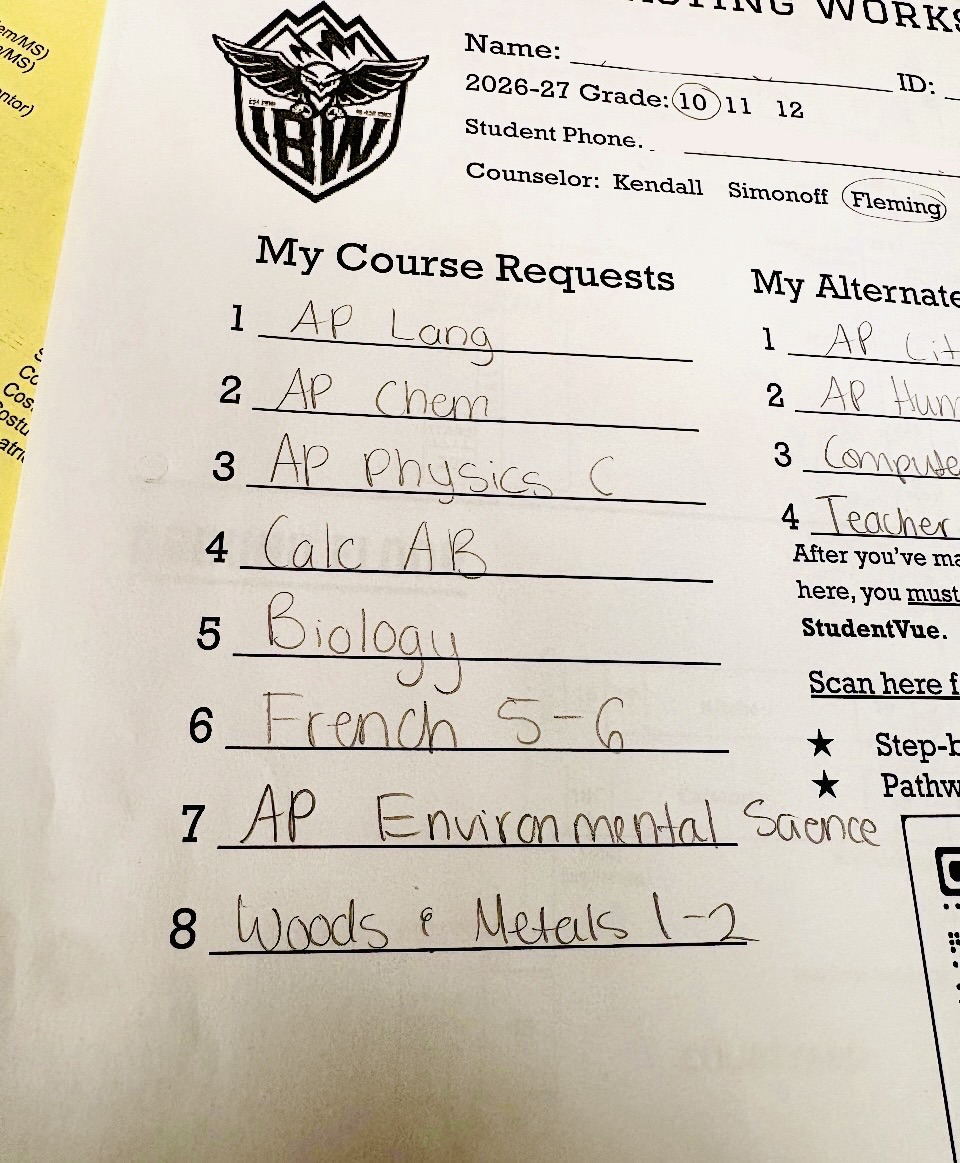
To put that into perspective, a student at Ida B. Wells, aspiring to enroll into a highly selective school, decides to take 12 AP classes. To do that they would need to take both of the classes available to sophomores, AP Human Geography and AP Physics, and five other AP classes during their junior and senior years. During that time they would have to perfectly balance workload and study time, while also making time for extracurricular activities, family obligations, self-care and breaks. The expectation to take as many APs as possible creates unrealistic work-life balances for students and sacrifices have to be made, whether it’s social life, health or extracurriculars.
The pressure around taking lots of APs also creates competitiveness and comparison among students.
(Naima) A lot of the conversation I heard around college admissions when I started to consider higher education was about coursework and course rigor. I thought that if I didn’t take enough AP classes and if I didn’t get As in those AP classes, I wouldn’t be admitted to the schools I wanted to go to. I took a total of seven AP classes in high school. Even so, when I got accepted into a more selective school, I felt a lot of imposter syndrome. I felt like seven wasn’t enough compared to some of my peers and even now, I really wish I had done more.
(Malija) Schools like to see students take AP classes because they want to see passion in their students. Say you’re an admissions counselor reviewing applications to a very selective college. Student A is interested in history, and took four AP history classes in high school. You can tell this student is willing to put in the work to master this subject and is ready for a rigorous learning experience, because they took advanced classes in a clear direction that they cared about. There are many good reasons to take AP classes, from saving money in college or university to taking a deeper dive to subjects that captivate you. But when students choose to take excessive AP classes about subjects they aren’t passionate about just for the shiny transcript, it harms not only themselves, but also students who are genuinely interested in the subject. Student B took eight AP classes, all in different areas and you can’t really tell where this student is going. They’re well rounded in every field, but they lack the clear passion and dedication that selective schools are looking for.
Competitiveness around AP classes and the expectation set that thriving students take a lot of APs can lead some students to take a class even if they’re not qualified.
(Naima) I can speak to this myself. I took AP Calculus despite not having taken pre-calculus. This was because I wanted another AP on my transcript and having done one of the hardest AP classes would make me look like a “great student.” I thought I was smart enough to “figure it out.” My performance in that class has nothing to do with my intelligence, it was simply outside of the scope of knowledge I was prepared to understand. I struggled a lot with calculus because I didn’t have the base concepts I needed to know to move on to the harder concepts of the class. I spent most of my time in that class in complete despair and getting down on myself for not understanding anything. No matter how hard I tried, how many alternative resources I looked into, how many hours I spent doing reviews, it never got any easier. I think a lot of kids who usually excel in their classes like I did probably also felt like they were qualified to do anything without it being too difficult and won’t do the necessary prep to actually do well.
(Naima) While performance expectations can feel overwhelming, it’s important to remember that they aren’t the only thing that matters. Being interested in your classes should be your top priority in high school. Not only does interest in your classes make you more motivated and perform better, but passion for your learning gives you better stories to tell. If your goal is secondary education, remember that the point of a college application is for the schools to get to know you. If you take classes you’re curious about, participate in extracurriculars you’re willing to take charge in and make genuine connections with your learning and community, that’s more valuable for your college application and overall enjoyment of high school and college than taking as many APs as possible.
(Malija) The college you go to isn’t the sole determinant of your future. My dad was always top of his class in high school. He attended Stanford University, considered by many to be one of the most prestigious schools in the world. As a child, I always looked up to him, and dreamed of achieving the same level of success. Yet funnily enough, when I ask him why he chose to go to Stanford, he tells me that part of him almost even regrets it. He tells me that at Stanford, he was a small fish, in a big ocean of equally small fish. You could attend the most prestigious school in the world, or your local community college, and have the same success in your future. The real thing that determines your future is your passion. Whether you attend a school purely to be competitive and end up burning out or choose to go to school to learn and become who you want to be is your decision to make. After all, would you rather be a small fish in a big ocean, or a big fish in a small pond?