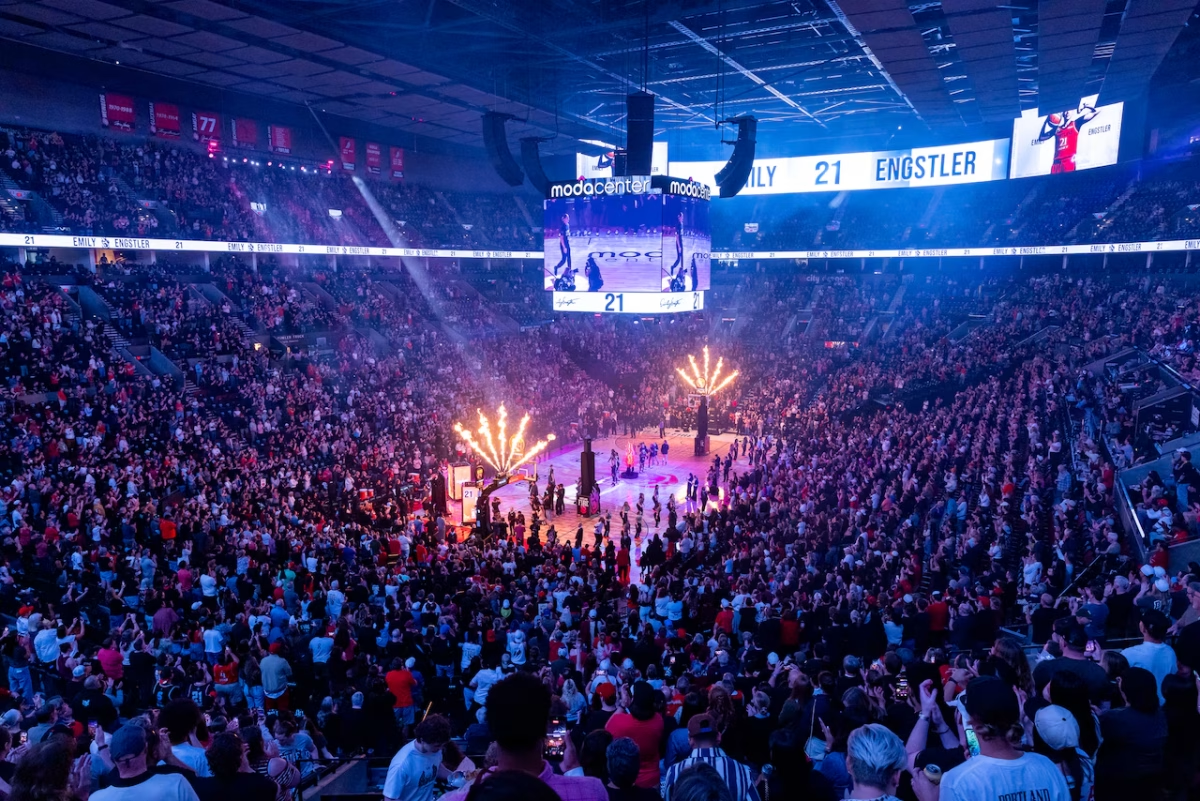
The fairly new women’s basketball league has had a successful start to the 2026 season, and will continue to strive until the season ends on March 4.
Unrivaled basketball came about in 2023, cofounded and partially started by WNBA stars Napheesa Collier and Breanna Stewart. Although this idea came to light in 2023, games didn’t kick off until early 2025. Stewart was the first to sign with unrivaled in 2024, but not for long. Many more players trickled in, resulting in the league expanding from six teams to eight, which allowed more players the opportunity to play.
The small, faster paced league is a great way for players to continue playing in the offseason, while also earning them some money as an alternative for playing overseas and risking physical burnout, injuries and more. It has been successfully helping the players, providing high, stateside, off-season income (over $200k+ average) and equity in the league.
Unrivaled games are played on shorter courts, for easier movement during the 3v3 games to manage stamina while running back and forth. WNBA courts measure at about 94 feet long, while the more condensed courts used for the unrivaled mini games are 22 feet shorter at 72 feet long.This makes gameplay faster and easier for the professional players. Games are also a bit shorter, consisting of 3 quarters that last 7 minutes, plus a fourth quarter with special rules. A 18 second shot clock is used for faster and more contained gameplay.
Like most of the rules in this smaller league, free throw rules are different as well. Only one free throw is taken, but instead of just being one point, the free throw can be up to 3 points depending on where the individual was fouled. The “Make it take it” rules used in street ball or 3v3 games at most levels apply, meaning whoever gets the rebound or gets the ball gets to play it.
Starting Feb. 10 and continuing to Feb. 14, Unrivaled is holding a small, 1v1 tournament, for players in the league. These games are single elimination, and played until one individual scores 11 points, or until the 10 minutes is up. Instead of the 18 second shotclock, (which is already pretty short compared to regulation), the short contests use a seven second shot clock.
The problem with preventing overseas play had been improving from Unrivaled as well, “serving as an example of how much women’s basketball players can be compensated without playing overseas,” says Colin Salao from Front Office Sports. Although overseas play typically earns quadruple the amount of the regular WNBA salary, there are many downsides to this somewhat normalcy option as well. Often, WNBA players who go overseas endure intense physical strain from these year round schedules. Unlike Unrivaled, which is a bit more laid back and fun, overseas play is more competitive, more similar to average WNBA gameplay. This not only increases injury risk, due to smaller roster sizes, back to back games increasing fatigue and tends to create an unsafe living/working environment, often depending on location. “While they play abroad for significantly higher salaries and to keep their skills sharp, the lack of rest and lack of high-quality care can hamper their careers and mental health” says Ben Pickman from The New York Times.
Overall, Unrivaled basketball is a great alternative to playing overseas as well as team and personal training. It’s been awesome this season and very very entertaining for all the people tuning in all over the world. Unrivaled will continue to strive for the next few weeks, and many spectators are looking forward to seeing how this season ends and waiting for the next to begin.