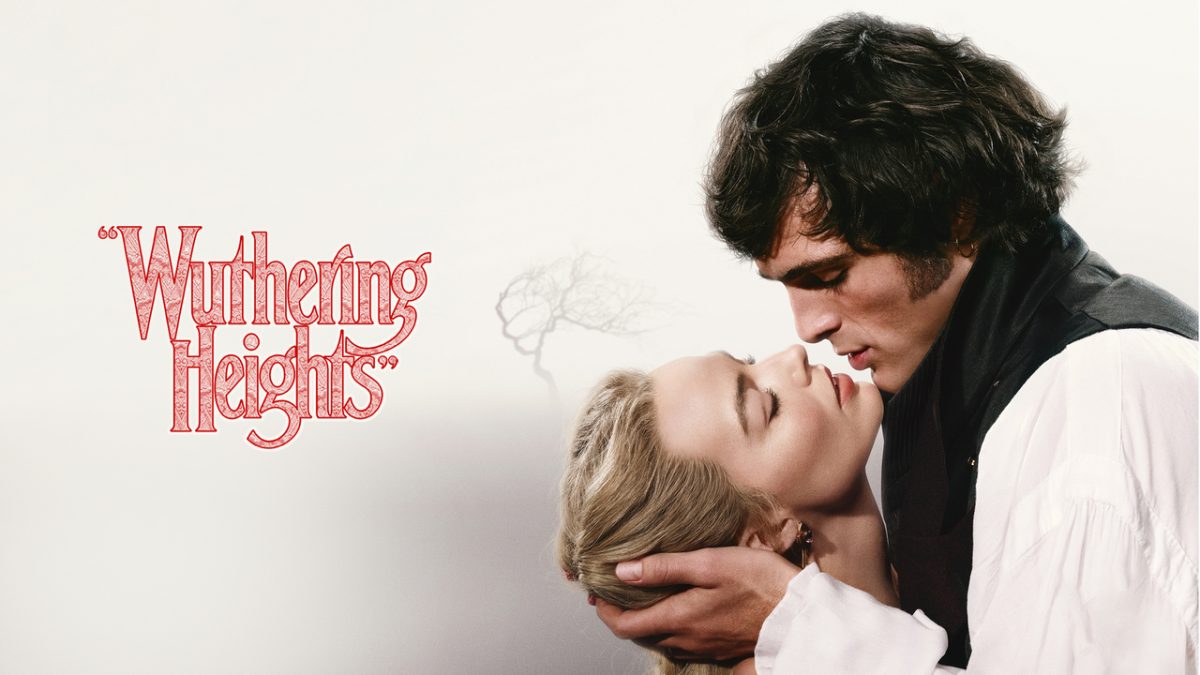
The long-awaited “Wuthering Heights” movie adaptation by Emerald Fennel was released on Feb. 13.
However exciting this news might be, it was followed by a large controversy in modern cinema. Many readers and critics argue that the movie stepped too far from Emily Brontë’s original novel and created a whole new story.
One of the main concerns in the adaptation is the lack of faithfulness to the original story. Scholars argue that “Wuthering Heights” is more than the “greatest love story of all time” as stated in the trailer. It is a reflection of racism, classism and abuse, which is highlighted through character representation in the book.
The Spinoff argues that the new movie focuses more on romance and erotic aesthetically-pleasing visuals than complicated themes. As a result, many believe the movie is over-simplifying the book, while ignoring Brontë’s original messaging and darker themes, choosing to be lighter and conveying this to a larger audience who might not have read the book.
Mirja Vahi, a senior at Ida B. Wells was unhappy with the changes in the movie. “[The new adaptation] is not respectful towards Brontë…taking the main theme from the book, and making it quite the opposite, is wrong and changes the message that she wanted to convey originally,” she said.
Keith Higbee, Language Arts and yearbook teacher, shares this opinion too and describes the sexual undertones in the trailer as “unhinged.”
“They are turning the book into this great love story, but it’s really all about abuse,” said Higbee.
The casting choices are also heavily criticized. Heathcliff, an outsider in the novel who is described as a “dark-skinned gypsy,” is surrounded by a mystery concerning his origins.
However, Jacob Elordi, who portrays him in the movie, is a white man. For many readers, this choice removes an essential aspect of Heathcliff’s character, erasing the central plot of the racism and abuse he experiences, which drives his evolution throughout the novel.
The actors are also criticized for being too old for the role they are playing. Margot Robbie, who plays Cathy Earnshaw, and Elordi are respectively 35 and 28 years old, far from being teenagers as the novel portrays.
Some claim this aspect of the movie is not the most important. “They are both pretty reputable actors. Regardless of their age or race, I feel like as long as they can accurately portray the characters, it doesn’t really matter too much, in my opinion,” said Otto Sellers, a senior at IBW.
But, Sellers suggested that race might be a more important point to consider in casting.
While some argue there are other adaptations with white and older leads, many proclaim living in the 21st century should make these details essential, mostly referring to the 2011 adaptation, which starred young actors and James Howson, a black man, as Heathcliff.
Fennel, the director of the movie, has addressed some of the critics in interviews, stating that the movie is supposed to be a modern retelling of “Wuthering Heights” and characters and set visualization during the reading of a novel differ depending on who reads it.
Making an adaptation that satisfies every reader’s interpretation and vision of the realm of “Wuthering Heights” is nearly impossible for Fennel to do. Yet, critics are wondering how far an adaptation can go before it cannot call itself an adaptation.
“I’m fine with people being inspired and then changing it into something else, but…if you’re going to go so far away from what it is meant to be, I don’t think you should call it the title of the book,” says Higbee.
The overall controversy and opinion surrounding the film is very divisive; while some are enthusiastic and believe the film will encourage more people to read the book, others are apprehensive about this new film, which they consider unfaithful to the original work.