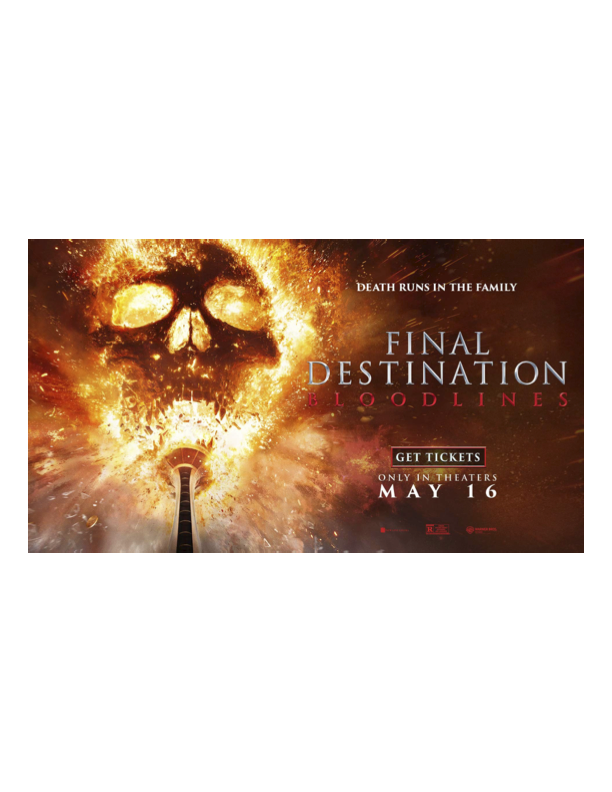
The release of “Final Destination: Bloodlines” has brought the series back into the spotlight by creating a new movie after nearly 10 years.
The first movie, “Final Destination”, was directed by James Wong and premiered on March 17, 2000. Its success led to multiple sequels, including “Final Destination 2” in 2003 and “Final Destination 3” in 2006, each introducing new characters while following the same basic premise of the previous movies.
The early reaction to “Bloodlines,” unlike the previous titles in the series, is receiving strong praise from critics. According to Rotten Tomatoes, it’s the highest-rated film in the franchise by over 25%.
The low ratings were due to audiences finding sequels predictable. Each installment of “Final Destination” follows a similar idea with different characters. The basic plot of each movie follows a group of people trying to escape their predetermined deaths, which forces “Death”, an unseen force of nature, to target and kill them in much more gruesome alternatives.
Though eventually deemed repetitive, the earlier movies were also praised by fans for the unique story idea and use of psychological horror. The concept of unavoidable death instills a sense of dread within the viewer. The movies’ focus on the use of everyday situations being turned into causes of death, for example, being strangled by a clothesline while showering, were made to cause paranoia.
Though “Bloodlines” also follows the base of the previous movies, critics describe the movie as “different.” It’s praised for feeling more modern and having impressive visuals. The story also delves deeper into the characters rather than just the deaths and shocking moments.
Charlotte Tapfer, a 9th grader at Ida B. Wells, has watched only the third and most recent movies. “I thought “Final Destination” 3 was pretty good,” said Tapfer. “The special effects were fine at the time, and the ways they died were creative. I really liked Bloodlines, though. The deaths were unexpected, and I loved all the characters.”
The positive ratings on this movie prove that the problem wasn’t the continuous use of the same idea; it was just the execution, effects and exploration of characters.