In June of 2006, Scott M. Scott, Keith A. Findley and Brent Snook published a book on their findings and discoveries regarding the psychological phenomenon of “tunnel vision” and its impact on wrongful convictions. According to Psychology Today, “tunnel vision” is described as an intense focus or bias on a central objective, disassociating with third-party or external factors. For example, in David Fincher’s 1995 film, “Seven,” the lead detective of the film, David Mills, played by Brad Pitt, is so focused on the capture of the main antagonist, John Doe, played by Kevin Spacey, that he ignores the “bigger picture” or various psychological traps.
20 years later, and people are still falling victim to this same phenomenon, amplified by the introduction and evolution of social media. Everywhere on music news outlets and social media pages, it seems everyone is trying to find the newest star.
This ubiquitous attention amassed many to expand their palettes and listen to the artists pioneering the “underground sound,” like Fakemink, Che, Osamason, Nettspend and Slayr, but fans weren’t satisfied. They became ravenous for the “new” version of artists, even though very few had more than two projects in their discography.
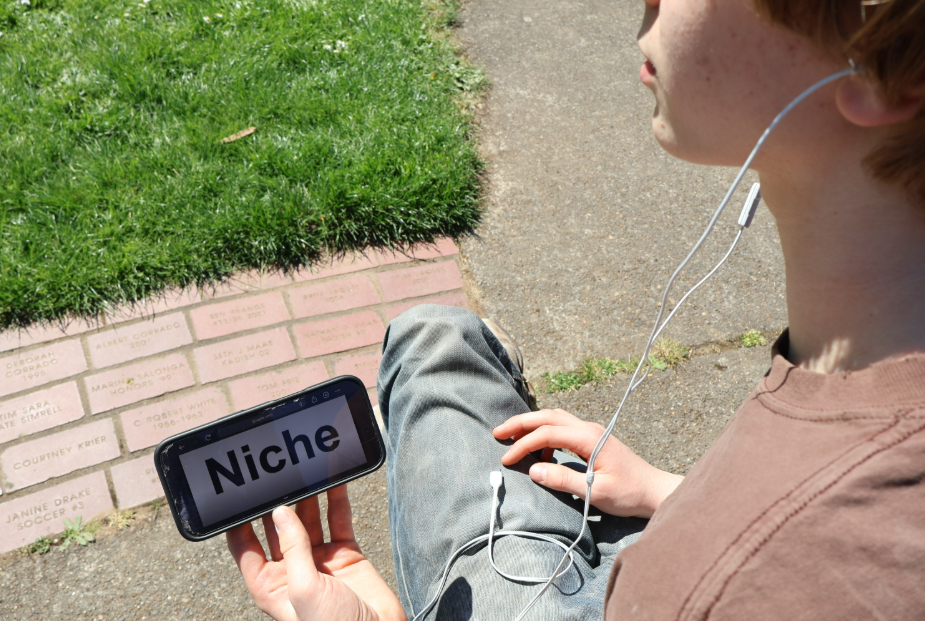
It was due to this insatiable hunger to discover something new that audiences began to dive into the “deep underground,” looking for artists with less than 10,000 monthly listeners. With numbers that low, the relationship between quality and quantity begins to blur, leading audiences to listen to artists who were just starting to make music.
With a focus strictly on the low number of monthly listeners, the artists’ audiences are listening to a product that’s yet to find a style or be refined to make it as cohesive and understandable as possible. Furthermore, this method of listening is gaining popularity, with trends and other music pages centering around this and glamorizing an unrefined sound.
“‘The underground’ used to mean there was a sound larger audience had yet to understand or yet to enjoy, so that was like 2016, which was like the whole SoundCloud era, which [is] basically the whole underground,” says Asa Gallop, an Ida B. Wells High School senior. “Nowadays, people just want to listen to someone who has fewer monthly listeners than their friend.”
A prime example of this phenomenon is the underground artist “2slimey” aka Sergio Garcia. Seemingly an overnight success, 2slimey currently sits at nearly 500,000 monthly listeners and only started making music five years ago. Garcia’s sound is many things, and “ordinary” isn’t one of them. Much like Playboi Carti, Garcia draws from the eclecticism and harshness of punk music, specifically bands like Minor Threat and Bad Brains.
However, Garcia doesn’t just pull from early 2000’s punk; he also combines the neon-splatter-paint sound of Lil Uzi Vert. Together. Garcia conglomerates the artists to create an inarticulate-maximalist sound often characterized by 808’s understood only by martians. He layers it atop bass that sounds like it was mixed on a beach during Hurricane Katrina, and vocals so unpolished and autotuned that it’s overshadowed by obscene production and various other elements.
While Garcia has a growing fan base, many “fans” only use his music as sounds on TikTok for memes and satirical propaganda about them enjoying his music. As an artist, when you see your song trending across social media platforms, you too fall victim to tunnel vision and focus on the sound that made you popular. Therefore, you continue to make this music without realizing that the majority of your fans use and listen to your music as a joke, creating trends that not only bandwagon you as an artist but also promote an unrefined sound.
At the end of this chain reaction, it creates an even more harmful effect of tunnel vision. With Garcia’s rise to fame, his harsh signature sound is extremely hard to gear toward an audience due to its maximalist tendencies, which causes rappers who are just starting to think they can replicate this sound without knowing its origin to suddenly become mainstream.
The only difference between good and bad art is purpose. While Garcia may have a highly eclectic sound, there’s a purpose behind it. But with the new generation of hip-hop artists solely wanting to copy this sound to “blow up,” the cycle of chain reactions and tunnel vision continues.
“[When] trying to understand different [musical] elements, [you could have] a cultured set of albums to listen to and try to understand different musical elements. And you can definitely do that music so far. Even underground style, like you could listen to fake mink and see how it works, just stuff like that,” says Eli Rogers, an IBW senior. “If you’re intentional about stuff, you’re gonna find stuff that’s not as popular, that diverges from the mainstream.”
“I’m always interested in seeing what someone has to say about new music or something that they’ve never listened to before,” adds Gallop. “So it does expand music taste. But in my opinion, that doesn’t also mean quality. So people are kind of, they call it ‘trained ears.’ Nowadays, people are just training their ears with this music, but you’re kind of losing some of the quality alongside that—it doesn’t really mean anything, there’s no substance to the music, and you’re just kind of listening to it because it sounds new.”
The words “contemporary,” “avant-garde” or “experimental” are often thrown around when applied to art that many don’t understand. At its core, all of them refer to art that isn’t supposed to be inherently understood and is meant to be dissected and studied. But for modern rappers, it’s important to draw the line between something “visionary” and something unrefined.
But with the musical tunnel vision of audiences prioritizing monthly listeners over quality of the music, audiences are glamorizing a sound that’s yet to be sharpened. Additionally, creating trends around it. This sparks a chain reaction. The next generation of rappers is realizing the popularity of this sound and trying to replicate it without understanding where their style derives from. It’s up to the next generation of rappers and listeners to determine how many copycats there will be before it’s too late to change what we call “modern rap.”