Arby’s, otherwise known as the Arby’s Restaurant Group, is one of the biggest restaurant chains in the United States. Originally founded in Boardman Township, Ohio, on July 23, 1964, by two brothers, Forrest and Leroy Raffel. Originally, the restaurant was to be named “Big Tex,” but had to be changed after the brothers discovered the name was already in use by an Akron business. Initially, Arby‘s was a singular restaurant on the boardwalk of the brothers’ hometown, offering a quaint menu of only roast beef sandwiches, chips and soft drinks. The interior of the restaurant was much different from what we see today, sleek and luxurious, trying to appeal to the citizens of a high social class in the town.
Arby’s began to take off, with a new sign being a red cowboy hat. By the 1970s, the chain was expanding at a rate of more than 50 restaurants per year. The restaurant continued to expand, with new items such as sauces and additional sandwiches, including chicken or pork. With this, the sleek, fancy design of the restaurant began to falter, especially after Victor Ponsers’ takeover of the company in 1984.
Things continued to go downhill not only for company profits but also for the food quality. A former PepsiCo (a large parent company for many brands) executive, Don Pierce, was brought in to “resurrect” Arby’s with $100 million in additional funding. Pierce moved to a new “Roast Town” concept, similar in format to Boston Market (a casual restaurant chain famous for its meat,) in 1996. The Roast Town concept received a poor reception in market tests and was quickly discontinued. Pierce and his team proceeded to leave the company, and it was left in the hands of the Wendy’s brand after changing ownership multiple times.
Arby’s remained out of the spotlight of fast food places due to its high prices and supposed low quality of the food. However, recently, Arby’s has been seeing a substantial increase in popularity, mainly due to popular memes circulating through social media. Although such popularity has been fairly negative, it is based on Arby’s seemingly unappealing products. Videos and pictures referencing R&B artist Rod Wave in the form of “Rod Wave Chitlin Mountain” and “Arby’s Rod Wave Takeover” paired with Rod Wave’s 2022 song “Married Next Year,” which references Chitlins, a food consisting of cooked pig intestines, playing off Arby’s visual appearance and overall aesthetic.
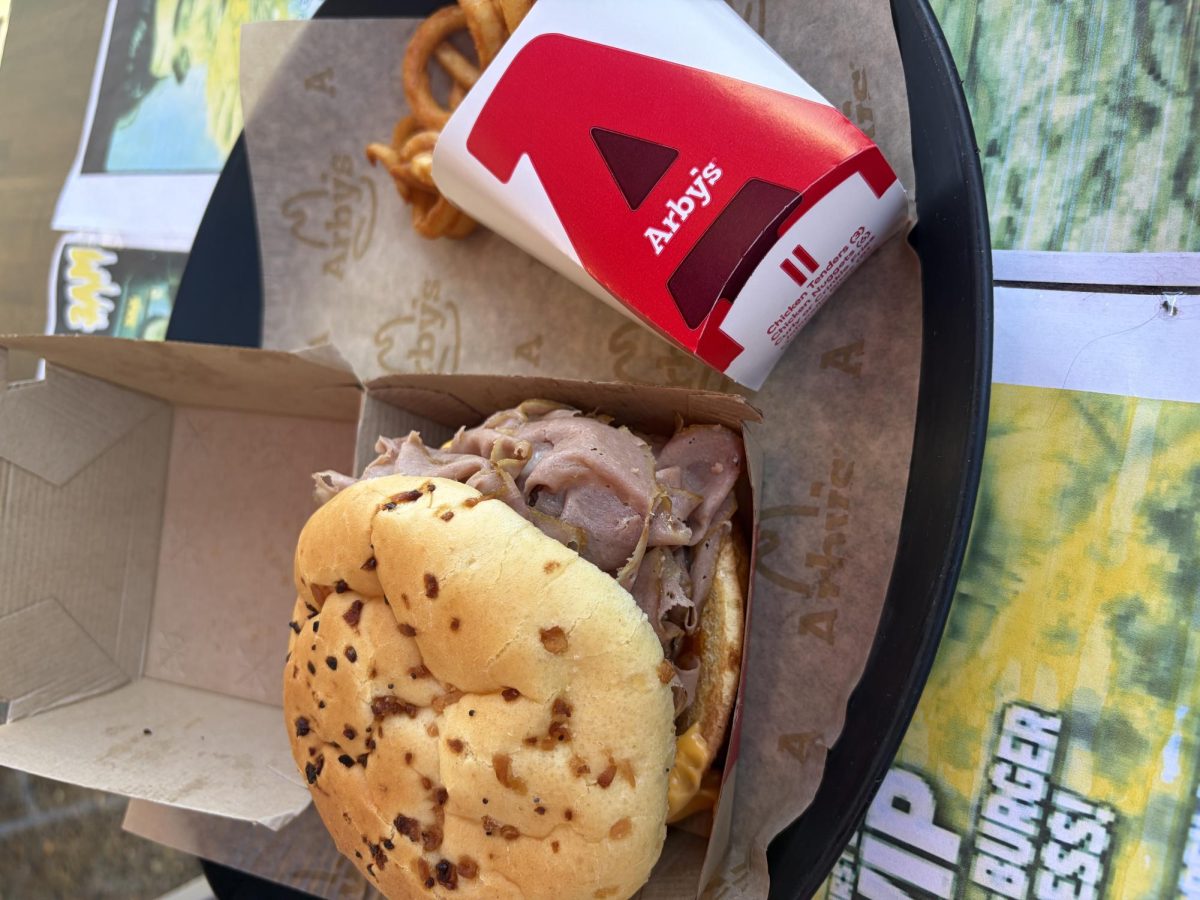
Moving on to an overall review of the Arby’s on Southwest Hall Blvd. The inside of the restaurant was fairly clean and quiet. After the experience with an open mind, setting aside recent negative publicity. We each ordered the half-pound Roast Beef and cheese meal, priced at 14.99. When the food came out, nothing could have prepared us for what lay inside. The fries were crispy, well-seasoned, and overall enjoyable. However, the sandwich did not meet expectations. It wasn’t anticipated to be that bad. The hate all seemed like a joke.
The sandwich’s appearance was unappetizing, bordering on something that looked like it belonged in the popular horror franchise “Resident Evil.” The roast beef was thin and gray, with noticeable discoloration along the edges. The sandwich contained an excessive amount of meat layered with processed cheese. The flavor was equally concerning, with a metallic aftertaste and an overpowering artificial cheese flavor. Both of us felt unwell after eating. Based on this experience, the negative perception surrounding Arby’s food quality appears warranted. Customers may want to consider alternative dining options.
It is reasonable to conclude that the recent discussion surrounding the declining quality of Arby’s food is not exaggerated. While avoiding any establishment entirely may be extreme, this experience suggests it should be a last resort, perhaps only to be considered when options are severely limited. In most cases, diners likely have a better experience choosing nearly any alternative, with a few notable exceptions such as Long John Silver’s. This aligns with Arby’s recent downward trend in performance. If the company hopes to remain competitive within the fast-food industry, a significant shift in quality and overall strategy may be necessary.