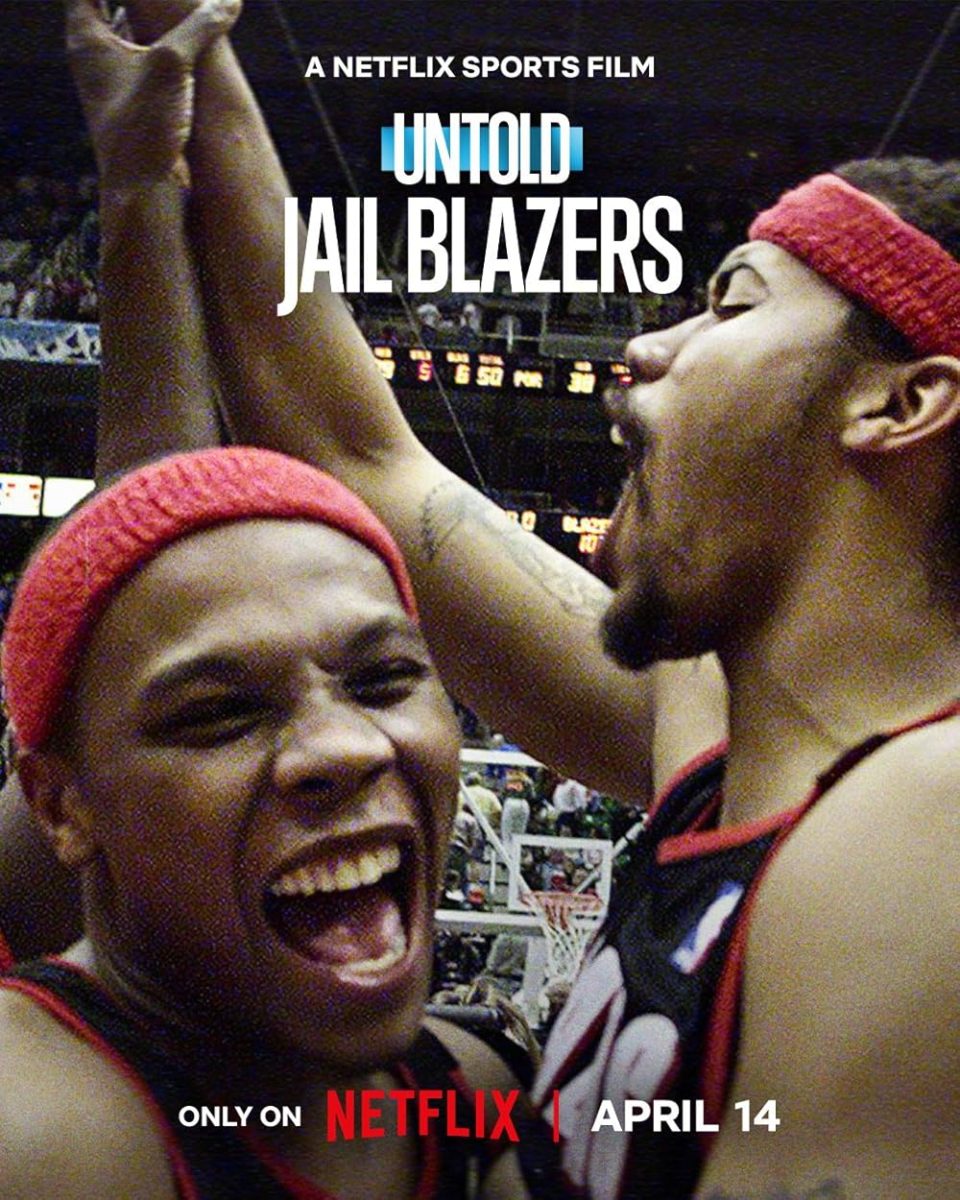
On April 14, 2026, Netflix blew the dust off the twenty-five-year-old book that is, the Portland “Jail Blazers,” a nickname for our city’s National Basketball Association (NBA) team called the Trail Blazers. From the 1998 to 2003 seasons, they were given this nickname for their turbulent on and off-court behavior, led by players Rasheed Wallace, Damon Stoudamire and Bonzi Wells. The team did great things on the court early on and had a very bright future. On and off the court, the hot-headed, passionate Jail Blazers could not stay out of trouble, and it proved detrimental for a city that was ashamed of their players.
As a part of the “Untold” Netflix series, which is a collection of different sports documentaries. This installation aimed to shed light on a team that was consistently well put together, but couldn’t keep itself out of the headlines for all the wrong reasons.
The documentary opens with a focus on the former Trail Blazers General Manager, Bob Whitsitt, or “Trader Bob,” who was hired to usher in a new era for the team after the Clyde Drexler era, which was earlier in the decade. In the early 90’s, they fell short of a championship and ultimately fell apart, and Bob Whitsitt came in to try and remedy the problems and lead them in a new direction.
Trader Bob is the mastermind behind all the decisions to build the roster around guys who had huge talent on the court, but needed a second chance for one reason or another. Whether it be a criminal charge or a hard college career in basketball, he’d sign them if they had the skills.
In 1996, the first notable move Whitsitt made was trading for Wallace, who was originally a Washington Wizard. This set in stone the development of the team had started and the new era of the squad. Quickly, Wallace made an impact on the court, and Trader Bob set out to find a guard to pair with his new young talent.
Stoudamire, a young star for the Toronto Raptors, was fresh off a Rookie of the Year campaign and had very promising talent that the squad needed. Stoudamire was also a hometown native, going to Woodrow Wilson High School – now Ida B. Wells High School.
The documentary shows a few more player signings, notably Scottie Pippen, but then flashes forward to the 1999-2000 season. Where the Portland Trail Blazers, led by Wallace and Stoudamire, found themselves one game away from the NBA finals against the Los Angeles Lakers, who were led by Shaquille O’Neal and Kobe Bryant. After an incredibly strong first half with the 15-point lead in hand, the team was red hot and rolling. But they began to miss their shots. 10+ shots missed in the fourth quarter, and ultimately lost to the Los Angeles Lakers. Unknown to the team at the time, it would be the closest they came to a shot at the title of NBA Champions in the Jail Blazers era.
One of the most scrutinized moves made by Whitsitt was the decision to acquire Ruben Patterson in the offseason of 2000. A move so controversial, many players and fans trust began to waver for Trader Bob. Patterson was charged with third-degree rape in May of 2001, after claims came out from the nanny at his home. He was given 2 years probation, a $5000 fine and was ordered to register as a sex offender in Washington, where he resided when the charges came out. “I would say that’s the only time that I truly could say I was mad with Bob, or upset with Bob,” recalls Wallace.
Whitsitt defends this decision, citing Patterson as “The Kobe Stopper,” believing he could get them over the hump against the Los Angeles Lakers, whom they kept falling short against. “There are people that deserve second chances, and Ruben is definitely one of those people,” and “Can I clean this guy up, repackage him and turn it into something spectacular?” were both examples of Whitsitt still defending this decision even twenty-five years removed from the controversy.
It becomes very evident to the viewer that throughout the documentary, Bob Whitsitt will not back down from his pride, to admit that some moves made were ultimately detrimental to the team and the fans’ loyalty to the team.
Another big reference the documentary makes is the incident between Stoudamire and Wallace. Who were cited with marijuana possession after driving back to Portland, after a game in Seattle. This was one of the most notable incidents in this team’s history, and eventually led the league and the city to turn against them, as many fans called them “thugs” and said they were horrible role models for the kids watching their favorite team.
By 2003, the Trail Blazers hadn’t made a deep playoff run in years, and more and more controversy was coming out around the team. Another drug charge for Stoudamire led to his worsening image, and the hometown hero was starting to be shunned. Wells’ horribly harsh Sports Illustrated article about the fans in Portland made the city turn their backs on him, and a season full of technical fouls and fines for Wallace made him almost universally hated by fans. Whitsitt, Paul Allen, the team’s owner, and the city decided enough was enough, and it was time to split the roster up.
Whitsitt was fired on May 7th, 2003, after a very turbulent tenure as general manager. He was replaced by John Nash in July of the same year. Rasheed Wallace recalls a story in practice from Nash’s first day in control. “I remember the first day at practice waving bye to everybody. I knew I was getting traded first.
He was soon shipped away to Detroit in 2004, which marked the end of an era in Portland. Wells was traded first, however, and was forced to leave the city in December of 2003. Stoudamire recalls being the last one left. With this, the documentary shifts its focus to his story as the hometown kid, being the last one left out of his tight group of teammates and friends on the team
The documentary does a great job at highlighting the fact that its main cast of players may have had on-and-off-court problems, but they were horribly mistreated in the eyes of the city and the way the league handled the issues.