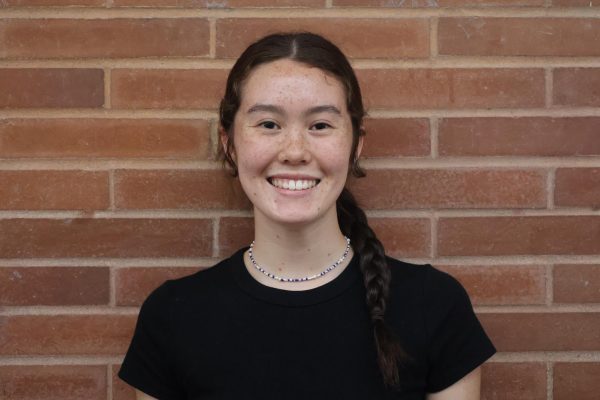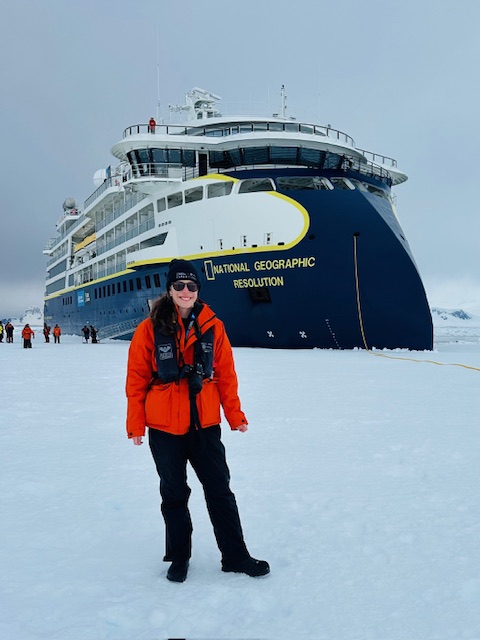
She saw penguins, passed by icebergs bigger than Ida B. Wells High School, cross-country skied on sea ice and took not one, but two polar plunges in the Antarctic Circle. Last month, Dr. Hillary Brown, a physics and geology teacher at IBW, spent 10 days in Antarctica as a Grosvenor Teacher Fellow.
The Grosvenor Teacher Fellowship is a professional development program for pre-K-12 educators, made in partnership by the Lindbald Expeditions and the National Geographic Society. Through a selective process, Grosvenor Teacher Fellows are hosted on National Geographic-Linblad Expeditions’ Voyages for a “life-changing, field-based experience” to bring back to their classrooms, colleagues, and communities.
Back in Portland, Brown has been very excited to implement and share what she learned on her trip with her science classes. “There are so many ways that you can apply polar sciences to both my physics and geology classes,” says Brown. So far, in her physics classes, Brown brought her experiences in Antarctica into her lessons on energy, and in geology to her lessons on glaciers. She has also busted some myths about Antarctica, telling her physics students that there are no polar bears there.
Even before the adventure started, Antarctica was a journey to reach. Beginning with a flight to Santiago, Chile, Brown then travelled to Ushuaia, Argentina, the southernmost town in the world. From there, Brown and the other Grosvernor Teacher Fellows boarded the National Geographic’s Resolution. Once boarded
on the ship, they went through the Beagle Channel to Drake’s Passage.
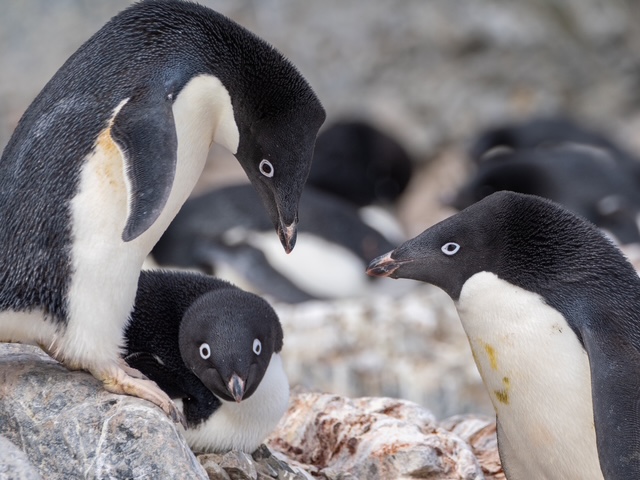
Brown says experiencing everything Antarctica has to offer was “really magical.” Between seeing whales breach and learning about different types of Antarctic wildlife, to breaking through “lily-pad” and “crystal” ice, there was always something for her to discover. “Every time you look out the window, it’s so different,” says Brown. “It was really hard to go to bed, not just because of the light, but you’d look out the window, and you’d see a massive iceberg going by that was like the size of Ida B. Wells.”
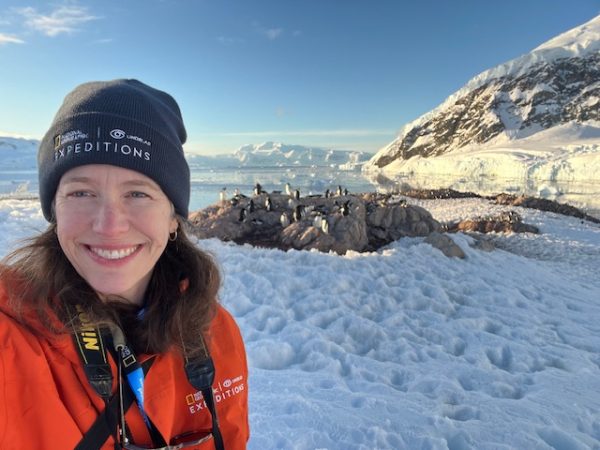
Brown feels very lucky to have life experiences like traveling to Antarctica. “The world is just an incredibly diverse, beautiful place,” she says. “It kind of puts the planet into perspective, and meeting lots of different types of people is always good too.”
She hopes that when students are presented with big opportunities, such as going to Antarctica, they take them too. “We should all be brave and want to explore new places and meet new people. Your world and your life is a lot richer when you are open to new experiences,” says Brown.
There are “a million [traveling] opportunities,” similar to Brown’s, open to all avenues of life and job experience. Even if it’s a low-entry job like laundry at a research center, Brown says doing something lik
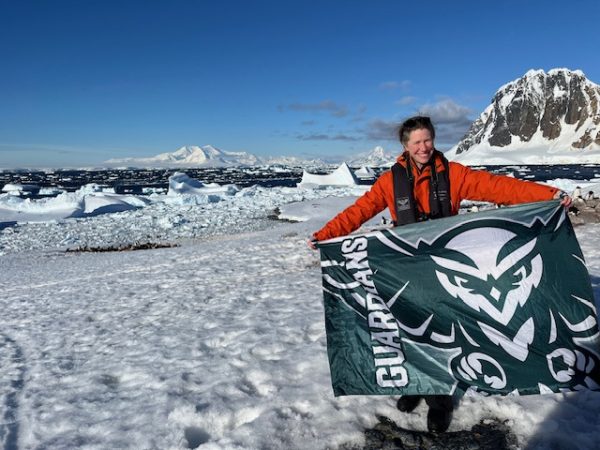
e this can lead to other, greater opportunities or simply teach you what you do or don’t like, which is also valuable knowledge.
Cross-country skiing on an ice sheet was one of the coolest things she did. “It was nice to go off with a small group of fast cross-country skiers and get to cruise around,” she says. “We’d come over a little rise, and there would be a whale seal, and then we [would] come around a corner, and there’s a different kind of seal. They [were] just kind of lying there, all chunky and happy, like taking a nap.”
Wishing that she gone to Antarctica sooner and having the ability to Zoom her science classes from Antarctica are only two regrets Brown has when reflecting on her trip.