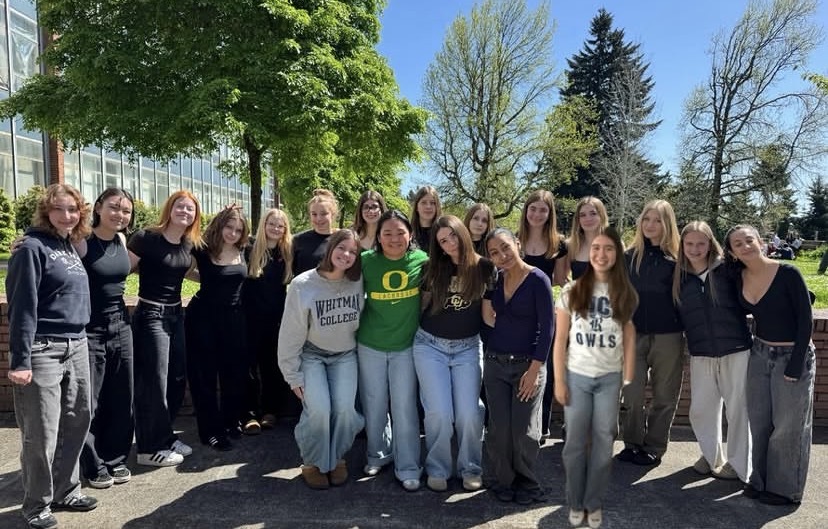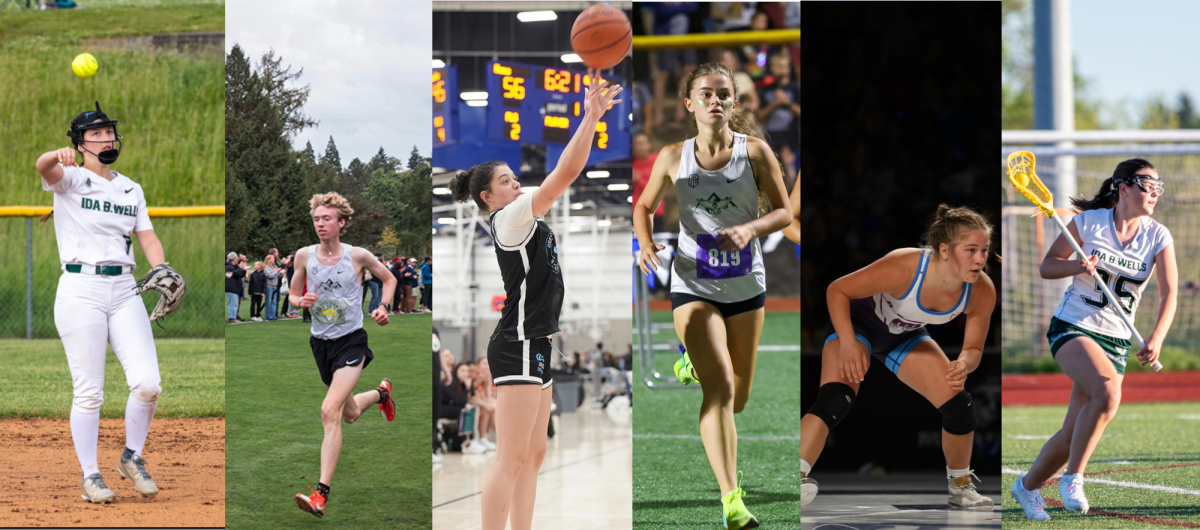
Senior decisions are flying in fast. From college to gap years to trade school, the options are endless. Some specific seniors are about to start their new collegiate chapters. These senior athletes at Ida B. Wells are ready to take their athletic careers to the next level.
According to the NCSA, NCAA D1 colleges can officially start contacting athletes at the beginning of their junior year, or the summer after their sophomore year. For D2 and D3, the rules are more relaxed.
Samantha Stevens
For Samantha Stevens, playing collegiately was always on her mind. “It’s been a goal and like a dream of mine since sixth grade,” she said. As an aspiring softball athlete, she viewed playing in college as the next level to reach. Now she can fulfill that dream, planning to play at Southwestern Oregon Community College as a pitcher and outfielder.
Stevens started her recruitment process at the start of junior year. Back and forth, she would reach out to colleges, contacting coaches through email, sending videos and sending more emails still. However, SWOCC was a school that reached out to her before she could, being the first school to contact her.
Stevens wanted to be able to get in the game right away. “I was looking for somewhere where I would be able to actually play and not just sit for three years and play my senior year,” she said.
Community colleges are two-year programs, and would create availability for Stevens and many other softball players to jump in early, rather than relying on seniority. SWOCC also has many other benefits, including being affordable and close to home, as well as having a welcoming team she could visualize herself fitting in with.
Otto Sellers
Cross country and track and field athlete Otto Seller’s route to pursue running at the University of San Francisco wasn’t exactly linear. Playing baseball as his main sport his freshman year, then splitting his time between baseball and track his sophomore year, made him realize he needed to choose one. “I often looked at it [running] as just a chore, something I had to do,” he said.
But seeing more potential in running, he quit baseball and gave running more of a chance during his junior year. His perspective towards running began to shift, and he began to flourish in the sport, finding a love for it.
Sellers reached out to many schools centered in big, diverse cities. While Boston and Chicago were close contenders, San Francisco ended up being the winner with its sunny weather, access to nature and architecture. “I’m always a sucker for that kind of stuff,” Sellers said.
When he heads off to USF this fall, he’s most looking forward to exploring the city, as well as meeting and training with his new teammates.
Sophie Lafrenz
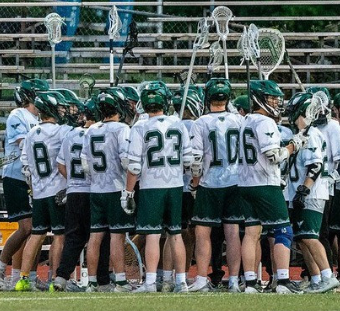
Lacrosse player Sophie Lafrenz was always drawn to the sport because of the community, and will continue being a part of one at Whitman College. “I’ve found so many incredible people in sports…it’s really something that I wanted to …continue to be part of my life,” she said.
Playing since first grade, lacrosse has always been in her life, along with friends. “Throughout my life, my best friends have been my teammates,” Lafrenz said.
When Lafrenz looked for schools, the school size was important. “I just knew I wanted something smaller…even outside of lacrosse, I just find that more approachable,” she said.
She actively looked for programs in the Pacific Northwest, D2 or D3 and somewhat close to home. Whenever she went on the road for a tournament, Lafrenz sent colleges in that specific area an email ahead of time to invite them to watch her play. Whitman ended up being one of those schools.
Lafrenz also considered the community. She is excited to join Whitman’s lacrosse community. After visiting the program in the fall, Lafrenz toured the school with a future teammate, watched her team play and attended a team dinner.
Lily Petrie
Lily Petrie, a member of the IBW women’s basketball team and avid player since second grade, will continue hooping for Pacific Lutheran University. “I’ve always just loved playing basketball, and I feel like if I didn’t play, I wouldn’t feel complete,” she said.
PLU stood out to her because of its campus. From the small campus size being easy to commute from class to class, to the amazing food she had a chance to eat on a visit, to the small class sizes for a better teacher-to-student ratio, it was the right fit for her.
Petrie had to adapt when an injury halted her commitment process. After a knee injury during the fall off-season, schools, and specifically PLU, held off their offers. During that time, she persisted through constant updates to the schools, letting them know how her recovery was and when she got back on the court.
Zorina Johnson
Zorina Johnson, a member of the girls wrestling team at IBW, took major and education into account when deciding which school to attend. Wanting to major in a STEM field, she chose a school that had a D1 wrestling team as well as a strong science program. She is prepared to wrestle for Lehigh University in the fall. Read more about her at ibwheadlight.com.
Jane Coffey-Read
The community and coaching were a big deciding factor for Jane Coffey-Read when it came to her commitment to Carleton College. After two official visits and continued communication with the coach, Coffey-Read committed to the Minnesota college for cross country and track and field. Having a qualified and backed coach was important for her, as well as having a good balance between school and athletics.
For aspiring athletes and those who want to continue in college, Petrie recommends starting to reach out to coaches as early as possible. “If you think it’s too early, it’s probably the right time,” she said.
Stevens recognizes that she couldn’t have done it without her family and club coaches. Through all the ups and downs of the process, she tells prospective college athletes, “Don’t give up when they don’t respond to your emails because it definitely can feel kind of disheartening.” She also says to lean into connections; one of her club coaches helped put her in contact with the SWOCC coach.
The commitment process can be daunting at first, but Lafrenz said, “The thing that I found overwhelmingly with every coach that I was in contact with is they were really so supportive with whatever your journey is.”
All these athletes will be headed to their respective schools this fall. All we can do is wait to see what they will do next.