Alright high schoolers, prepare to graduate online.
The new hantavirus variant has made its way aboard the MV Hondius cruise ship. While the passengers have been evacuated and quarantined, this outbreak hits a little too close to home after the COVID-19 outbreaks.
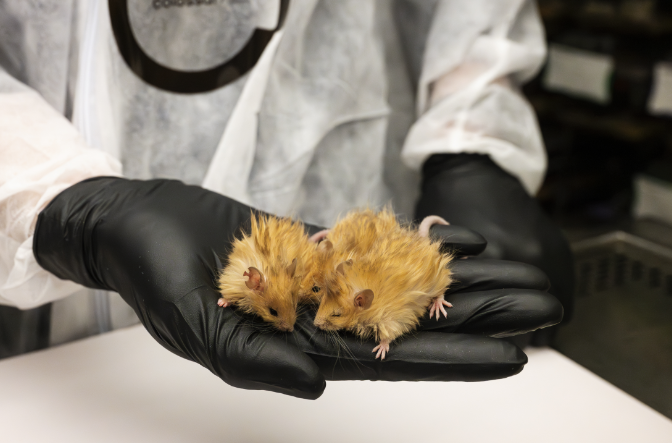
However, hantavirus is very different from COVID-19. It’s a relatively uncommon virus, typically spread through contact with rodents such as rats and mice, often via their saliva, urine, bites or scratches. Although the virus is uncommon, the death rate is quite significant at around 40 percent, whereas COVID-19’s global fatality rate was estimated at around 2 percent.
Many contract the virus through person-to-person transmission—by close, prolonged contact with an infected person during the early stages of illness. This characteristic of how the disease spreads would be especially prominent on a cruise ship, such as the MV Hondius, because of the close proximity of passengers.
Symptoms of hantavirus include fever, severe muscle aches, dizziness, fatigue and stomach issues. Symptoms usually emerge within a few weeks, but according to the US Centers for Disease Control and Prevention, they can take up to eight weeks to appear.
Additionally, here’s a timeline of everything we know so far about the cruise’s journey:
April 1: MV Hondius cruise departs from Ushuaia, Argentina, heading for the Canary Islands.
April 11: First death occurs. A 70-year-old man, whose body was later thrown overboard, died of unknown causes.
April 26: The wife of the first victim dies in Johannesburg, South Africa, with a confirmed variant of hantavirus. She had previously taken a flight from St. Helena to Johannesburg.
April 27: Another passenger is confirmed to have the hantavirus variant and is medically evacuated to an intensive care unit in Johannesburg.
April 28: As the ship sails for Cape Verde off Africa’s west coast, a German woman becomes sick with the hantavirus variant.
May 2: The same woman dies on board the cruise. Two days later, the World Health Organization confirms a hantavirus outbreak on the cruise ship.
May 6: Health officials confirm the outbreak is caused by the Andes strain, one of the deadliest hantavirus variants and the only one known to transmit from person to person.
May 7: Health authorities in multiple countries begin isolating passengers who left the cruise ship and tracing people who may have come in contact with the passengers.
May 10: The cruise ship reaches Tenerife, the largest of the Canary Islands, and anchors offshore that morning.
May 11: An American and a French woman tested positive for hantavirus. The evacuation process wraps up, and passengers fly to their respective countries while governments monitor and quarantine those who were on the ship.
Aaron Olsen, a Health Occupations teacher at Ida B. Wells-Barnett High School, thinks there will be more hantavirus outbreaks in the future. “I’m not saying we’re going to have a zombie apocalypse or anything,” Olsen says. “It’s unfortunate for [people with the hantavirus], but I think we’re going to see more outbreaks.”
Despite fears surrounding the sudden outbreak of the virus, this isn’t the first time hantavirus has appeared. Hantavirus was first reported in 1993 during an outbreak of severe respiratory illness in the area where Arizona, Colorado, New Mexico and Utah meet. Hantavirus Pulmonary Syndrome has been a nationally notifiable disease since 1995.
In 2023, cases of hantavirus were reported in the United States for the first time in years. The western US experienced the most disease outbreaks, and states like Washington, California, Arizona, New Mexico and Colorado each reported more than 50 cases.
As for why a vaccine wasn’t created earlier, Olsen says the disease likely wasn’t considered widespread enough to spark major concern.
“I would assume it was small enough that there wasn’t a big concern to quickly make a vaccine,” Olsen says. “But now that it is becoming a bigger deal and people are getting more concerned, we may develop a vaccine to eradicate it.”
Not only is the lack of a vaccine invoking fear among some people, but there have also been raised concerns regarding the overuse of antibiotics.
Olsen believes the frequent use of antibiotics in healthcare could be a problem. “These pathogens will build a resistance to antibiotics,” Olsen says. “If doctors give you a standard antibiotic for an infection and that strand has become resistant, you can get really sick, and there might be nothing they can do about it if they don’t have the right treatment.”
This could be especially dangerous for people with hantavirus, considering the disease’s severe fatality rate. According to Nebraska Medicine, there is no cure or specific treatment for hantavirus, and the best thing doctors can do is support the patient throughout the infection.
While the disease is harder to transmit than COVID-19, hantavirus could still pose a serious threat if not handled properly. Some believe we could be facing a “COVID 2.0,” while others think the outbreak will remain limited, nothing more than a “blip,” as Olsen describes it. Still, many hope humanity has learned from the pandemic and that history will not repeat itself.