The woolly mammoth has been extinct for 4,000 years but scientists are now working to bring it back. A biotech company called Colossal Bioscience co-founded by Geneticist George Church and entrepreneur Ben Lamm are attempting to create a cold resistance mammoth. Their goal is to create the first hybrid calf by 2028.
Scientists are trying to de-extinct the woolly mammoth by Clustered Regularly Interspaced Short Palindromic Repeats gene editing technology to modify Asian elephant cells with mammoth DNA. Though, scientists need to find a well-preserved woolly mammoth before they do so. Luckily, well-preserved woolly mammoths have been found in Alaska and Siberia. There are whole mammoth remains that look like they were alive on earth fairly recently.
Scientists are attempting to recreate the well-known shaggy hair, curved tusks, fat deposit, dome shaped cranium and many other features to help the elephants to perfectly adapt to the cold temperatures in the arctic.
The reason scientists want to bring back the woolly mammoth is to help to restore the grassland ecosystem. In change, this can help with the cold temperatures in the ground and climate change. Though the woolly mammoth isn’t the only extinct animal scientists are trying to bring back, they are also trying to bring back dire wolves, dodo birds, and the Tasmanian tiger. The dire wolf was successfully brought back in 2024 with two male puppies being born using the same technology they are using to bring back the woolly mammoth.
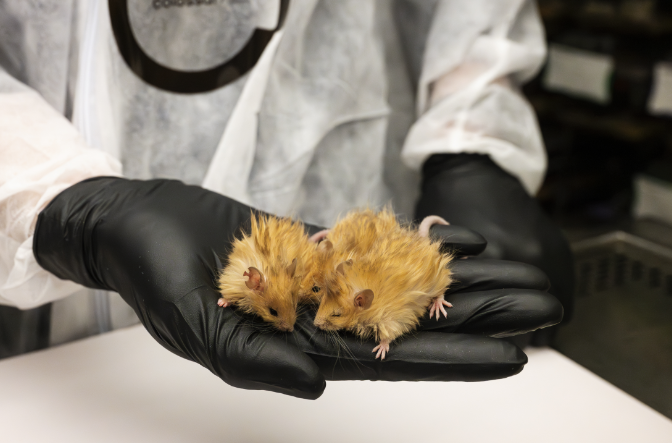
In March 2025, scientists created woolly mice editing their genes for thick long hair proving the gene editing to be successful. Sadly, you cannot buy the mice to keep as pets. They are for lab access only. The mice are crossed with woolly mammoth and lab mouse DNA scientists say it’s the first step to bringing back the woolly mammoth.
These animals are made to mimic the ecological role of the original mammoth, reducing greenhouse gas emissions.The company, Colossal Biosciences is on track for successfully bringing back the Woolly mammoth but it is still undetermined when scientists will be ready to introduce their newly-created woolly mammoths to the Arctic. Plus, this is very dependent on how the first calf looks, and if it inherited the right genes for it to withstand the cold temperatures in the Arctic for survival.
Sruthi Muraldiharan a Physics teacher at Ida B. Wells, thinks that they will most likely not be able to make a woolly make a woolly mammoth and if they did make one they wouldn’t be able to populate the arctic with them. “Its a waste of scientific knowledge and money.”