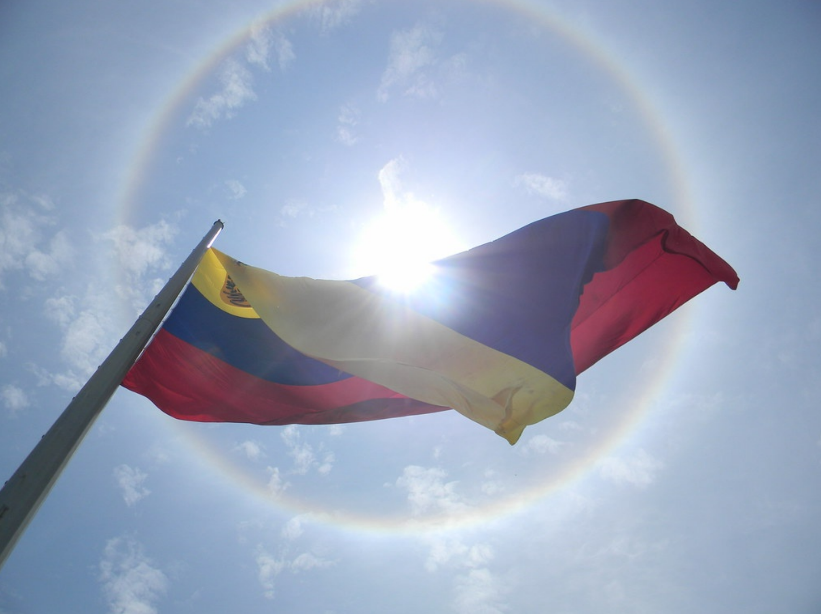
On Jan. 3, 2026, Nicolás Maduro, the president of Venezuela, was captured by US troops and taken to the Metropolitan Detention Center. He is currently on trial in New York City for narco-terrorism conspiracy, cocaine transportation conspiracy, possession and conspiracy to possess machine guns.
The Trump Administration, the Central Intelligence Agency (CIA) and the US Army have been planning to capture Maduro for a while, since March 2020. The capture was swift and violent, with Donald Trump stating he refrained from informing Congress about his plans, fearing members would leak information about the attack to Venezuelan officials and prevent a surprise ambush.
Maduro and his wife, Cilia Flores, were captured at the military complex Fort Tiuna. First, there were airstrikes in Caracas, estimated to have killed 100 people, including civilians. Then, ships that were suspected of possessing drugs were attacked via airstrike, which has happened before. The US has been striking down Latin American ships since Sept. 2025. Trump’s administration’s second term has attempted to crack down on drug trafficking from Latin America.
Maduro has done significant damage to Venezuela, especially economically, according to Economics Observatory, oil prices fell while Venezuela lacked savings. Public opinion of Maduro has not been favorable, and a major reason he remains President despite this is the transparent voting.
Transparent voting is a system similar to normal democratic voting in terms of ballot counting and the sharing of results; however, it’s all for show, since Maduro has dictatorial power to remain president, even if the general public votes for his opponent. In short, voting is meaningless yet visible to the public. In 2024, his opponent, Edmundo González, won in a landslide but Maduro refused to end his presidency. Transparent voting was set up by the previous president, Hugo Chavez, since he was always the popular vote and making vote counts public, showing evidence that he didn’t commit voting fraud. But the true system in Venezuela is authoritarianism, not democracy.
Verónica Gutiérrez, a Venezuelan woman who migrated to southeast Portland, said, “There’s no other way of getting rid of this situation other than military intervention,” and elaborates that she understands why many US citizens feel upset about this and are questioning the legality of this, but said that Venezuelans “feel happy about it.”
Other Venezuelans collate this, saying they are generally happy that Maduro is gone, but they aren’t sure what’s going to happen to their country next. “It doesn’t guarantee us anything. So there is a bit of uncertainty. We don’t know what the coming days will bring,” said Jorge, a citizen of Venezuela.
WhileTrump claimed the capture was a war on drugs, this incident mirrors other historical moments in the Americas, like when past president Dwight D. Eisenhower had the CIA launch psychological warfare plans, which led to the president of Guatemala being overthrown and leading the country into a more conservative, right-wing direction, as opposed to the previous socialist direction.
This sparked theories among leftists. Many believe the US federal government didn’t approve of the dictatorship and economic failure of Venezuela under Maduro’s presidency, and are planning to station a new, democratic president under Trump’s administration’s control over Venezuela. Trump’s statement that “we have to fix the country first. You can’t have an election. There’s no way the people could even vote,” is being used as evidence for this theory.
Another theory is that this is oil-related. Since Venezuela provided oil for the US. Oil prices declined rapidly during Maduro’s presidency. After the raid on Venezuela, major oil stocks have increased in value. According to Associated Press News, “Chevron jumped 5.1%, Exxon Mobil rose 2.2% and Halliburton surged 7.8% for some of the strongest gains in the market.” President Trump has also made claims about how the US could make way more money on oil because of his plans.
Trump’s capture of Maduro was sudden, and is supposedly driven by anti drug trafficking reason, but Maduro being a dictator and driving oil prices down has brought up other concerns. Whether Maduro’s capture was good or not is still heavily debated.