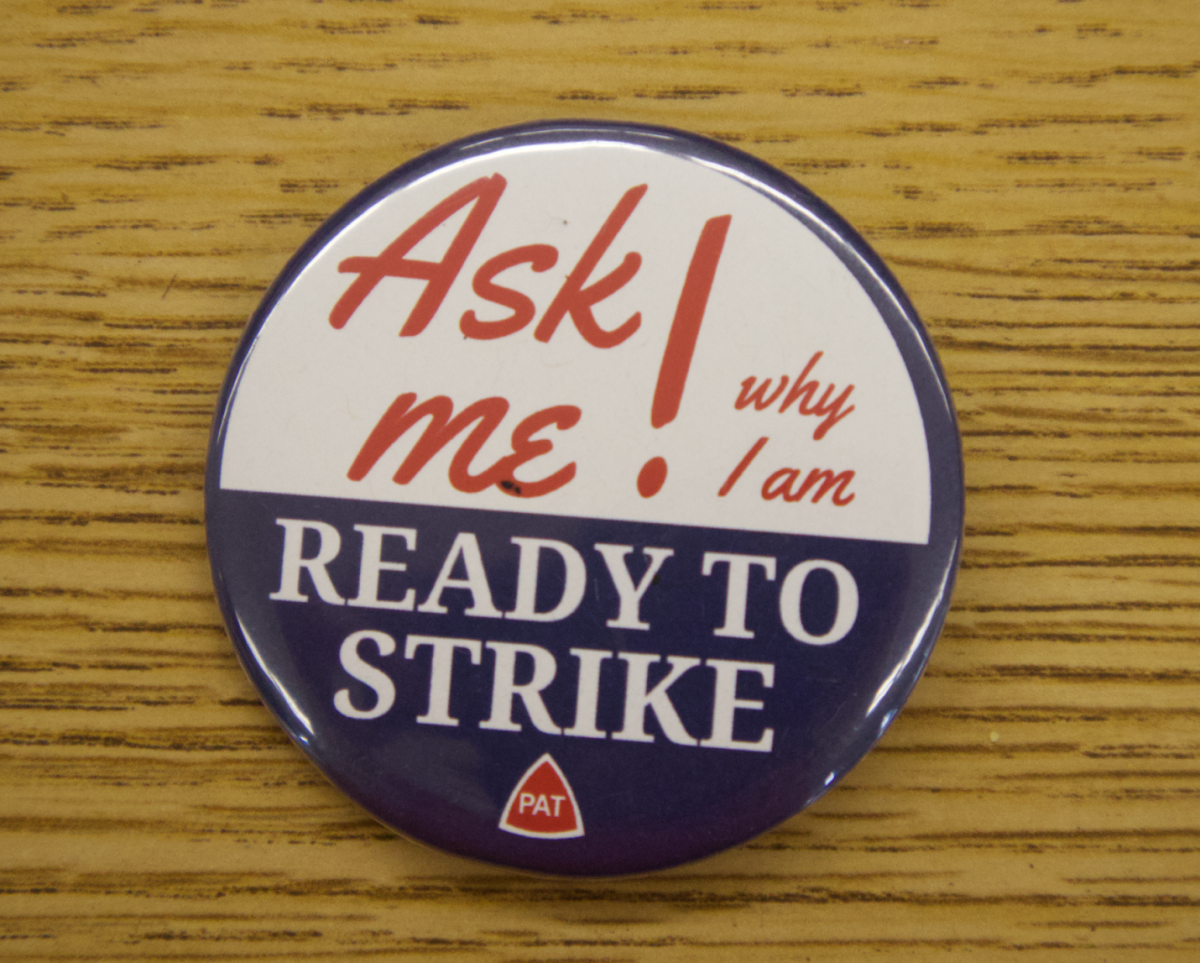
Annaleah Wonder remembers the 2023 PAT strike clearly: “We don’t want to do this. Please let us get back in our classrooms. We just want a better environment for our students,” said Wonder about her experience on the picket line. Many teachers hope there will not be another strike and that negotiations will go more smoothly this time around.
Negotiating their last contract was challenging. According to Nea.org, teachers were bargaining for smaller class sizes, higher pay, more planning time, smaller caseloads and safer classroom temperatures.
This year, the contract that Portland Public Schools (PPS) and the PAT both agreed on is coming to an end, which could mean another long battle. Amy Durham, a Spanish teacher at IBW, said, “There’s a lot [of rules] in the contract, but we work with our union, leadership and our bargaining team, which are elected members of the union. We get together with representatives from the district and they negotiate over the language of the contract.”
For the 2026-2027 school year, PPS is experiencing a $50 million budget shortfall. Wonder says this means teachers will be cut, programs will be cut or class sizes will be “huge.” This poses a significant dilemma, as both elective classes and teachers can be cut, removing valuable parts of IBW.
During the last strike, one of Portland teachers’ priorities was bargaining for class caps to ensure teachers wouldn’t have extremely large class sizes. With the upcoming budget shortfall, class sizes could be 30 or more students for every teacher next year. “[PPS] refused to consider class caps anytime we brought them to the table during the last bargaining,” Wonder said.
These cuts will also affect every program and school that PPS manages.
“I would love to see class size caps for elementary schools,” said Durham. “ I would love to see no kindergarten classes over 20 students per teacher, and then other elementary school classes around that number, too. So, no more than 25 students in one class. I also really would love to see no blended classrooms, like third grade and fourth grade.”
Teachers also went to the picket line to improve the learning and working environment. In 2023, during the last contract negotiation, teachers secured an extra planning day after each quarter ended, allowing more planning time and better working conditions. “When it comes to the strike, teachers are not only begging for themselves, but fighting for improved working conditions that directly impact student learning conditions,” said Durham.
When teachers are bargaining, they are not fighting just for themselves. “The community of educators fighting for the betterment of our students, that’s what I like about [the PAT],” Wonder said.
As of now, it is not clear what exactly teachers will be bargaining for. Based on what they fought for in 2023, they will likely negotiate again for smaller class sizes, better pay and overall better learning conditions.
Currently, the PAT is working on gathering information on what they want to bargain for.
After that, negotiation will begin.
Teachers don’t want to strike again, but are willing to put up a fight. “I do not want to go on strike again, and I’m really hopeful that the negotiations this year will not be as contentious,” said Durham. “We have a lot of things in place, including a more aware school board, which the union was very involved in helping those board members get elected because they were very education-minded and teacher-minded.”