From shadowbox storytelling, Michelle Duster’s virtual visit, a personal story from a 2018 Ida B. Wells-Barnett High School alumna, to performances from the Jefferson Dancers, IBW students had the opportunity to learn, reflect and uplift during the nation’s 100th Black History Month.
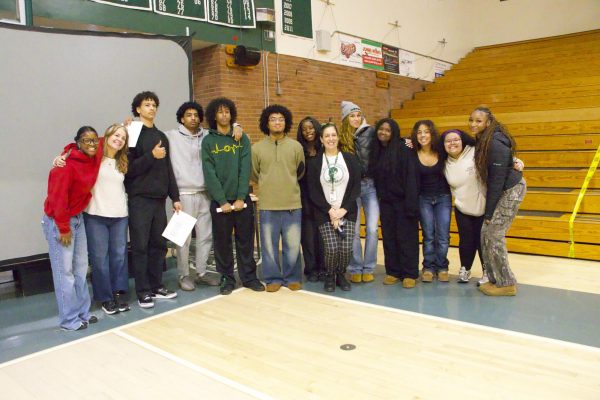
On Feb. 19, IBW held its second annual Black History Month assembly in the gym.
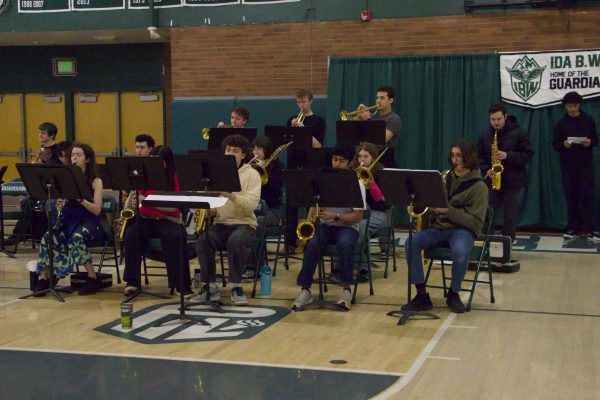
Just before 10 a.m., IBW’s jazz band welcomed students to the assembly with jazz music, a genre African Americans created in New Orleans during the late 19th century to early 20th century. The genre combines African, Latin and European music styles.
Robert Gray and Jackson Middle School students also joined the IBW community at the assembly.
“It’s for everyone,” Eesa Taylor, an IBW senior said. “We have black students at Robert Gray and Jackson, who I’m sure oftentimes feel the same struggles like us Black people at Wells do. It’s important that they are included also because a lot of us go through the same struggles and they’re still part of our community.”
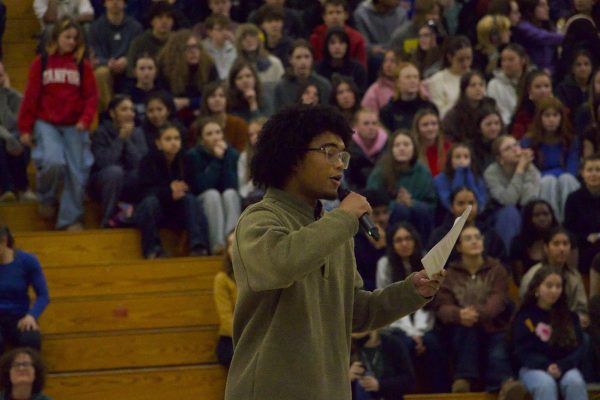
Taylor is a co-president of the Black Student Union (BSU) at IBW. With the support of leadership classes, BSU organizes the annual Black History Month Assembly.
As BSU planned the assembly, they focused on incorporating specific themes as they faced a predominantly white crowd. “Our main focus was embracing identity,” Taylor said. “Another part of the theme of identity was celebrating blackness.”
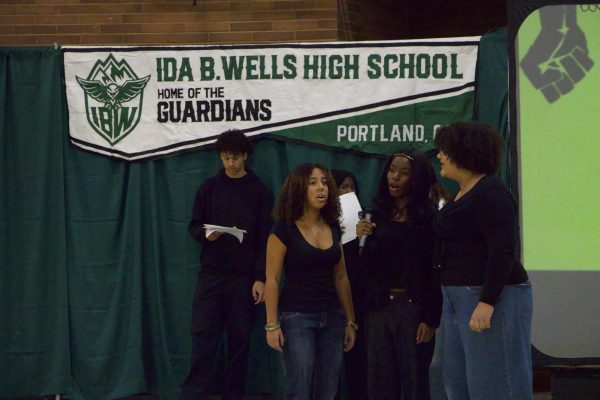
BSU members Davina Scott, Eloise Parson and Izzy Goah opened the assembly with their performance of “Lift Every Voice and Sing,” the Black National Anthem. The anthem was first written as a poem by James Weldon Johnson in 1899, and later adapted into a song by his brother. Schoolchildren in Jacksonville, Florida, were the first to perform it in 1900.
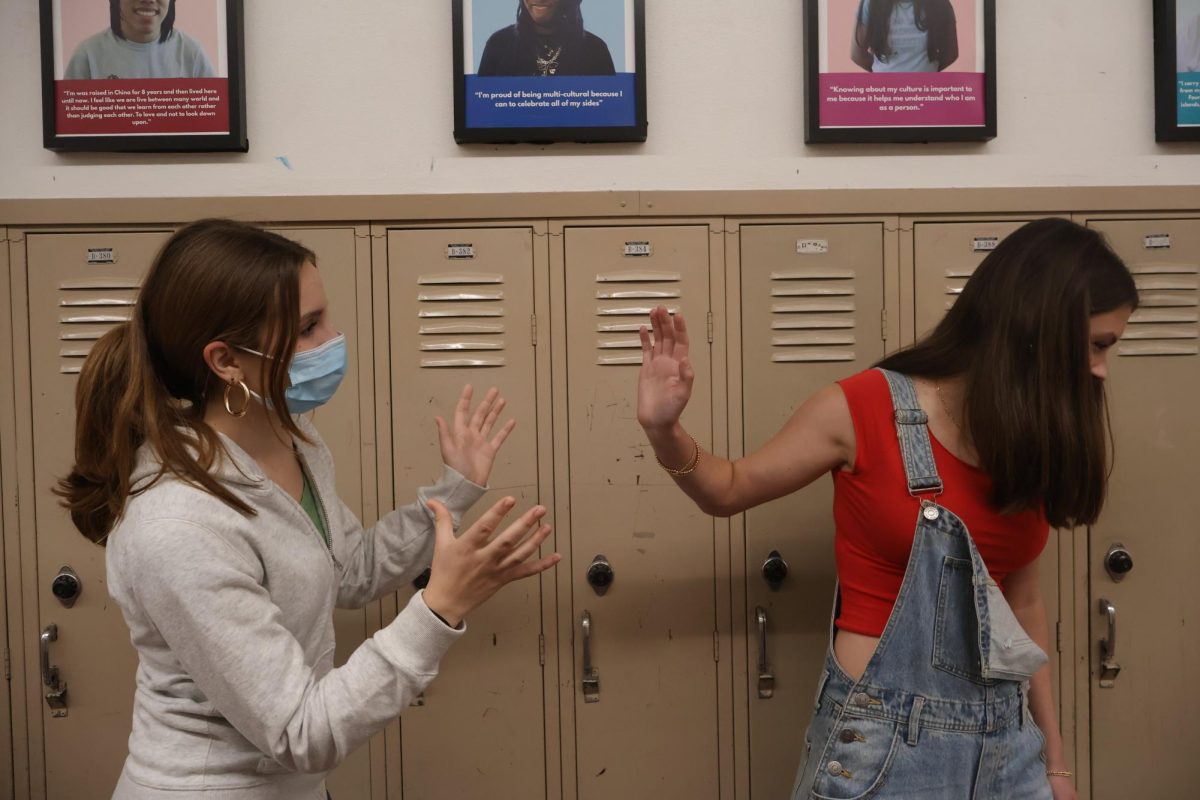
Six shadowbox stories followed the performance of “Lift Every Voice and Sing.” As performers stood behind a green screen, viewers could only see their silhouettes and hear their voices. The concealment of the storytellers’ identities asked students to consider the story behind every person they meet.
Each story told was a lived experience. Through poems, quotes and personal anecdotes, students discussed themes of belonging, identity across cultures, intersectionality, struggle, resilience, navigating predominantly white spaces and pride.
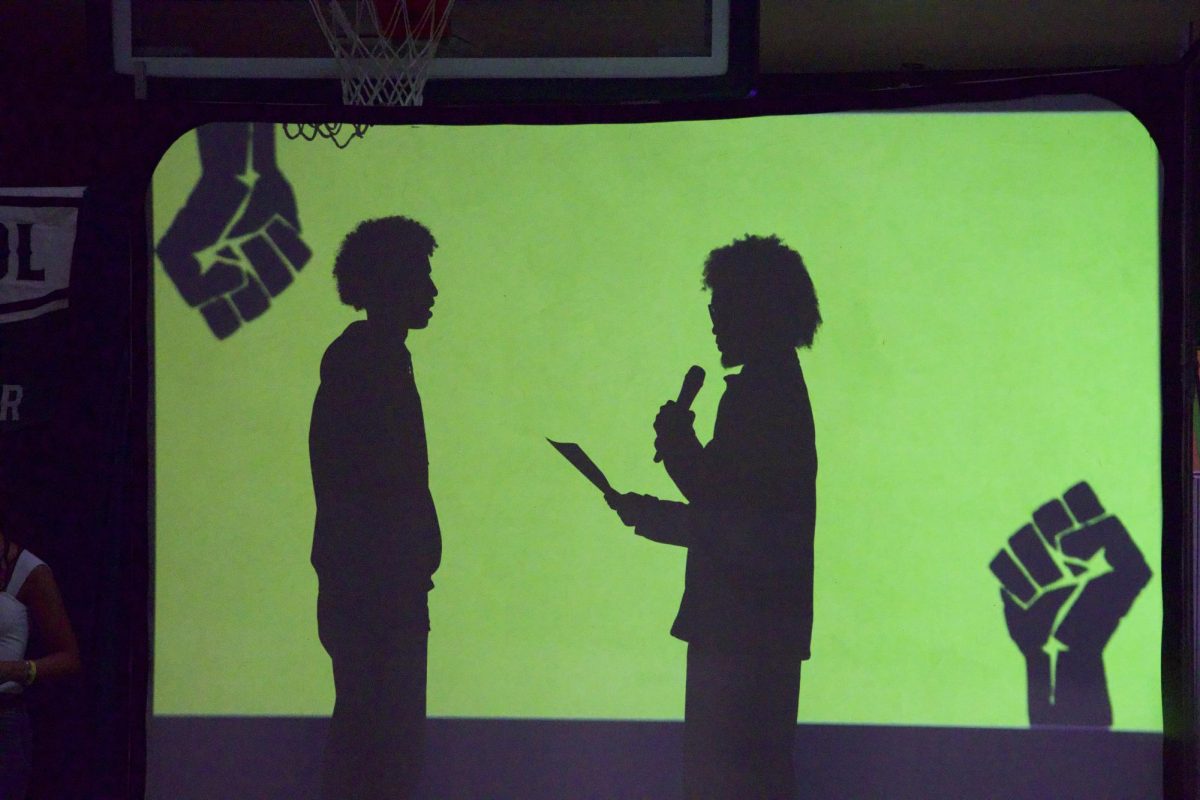
The moderators closed the shadowbox storytelling by reminding students of the power of stories. “We encourage you to carry forward what you heard,” one said. “Understanding someone’s story is one of the most powerful ways that we build community.”
Promptly after, Michelle Duster, a historian, author, activist and the great-granddaughter of Ida B. Wells-Barnett, joined the assembly virtually. Here, Duster shared six ways to be a good ally:
- Don’t make yourself the center of someone else’s story.
- Protest, boycott and support marginalized groups genuinely and intentionally.
- Be willing to follow someone else’s lead.
- Proactively educate yourself. BIPOC people are not 24/7 educators.
- Speak up on behalf of people you are allies with, especially when they are not present.
- Uplift people by crediting the contributions of cultures you are not a part of.
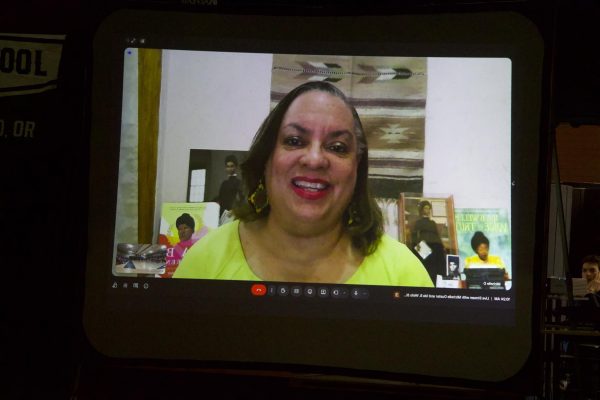
Duster also discussed how Bad Bunny’s halftime show at Super Bowl LX was “a case study of allyship.” She referenced various elements of the show, like the depiction of electrical workers, Villa’s Tacos, La Casita, Ricky Martin’s performance of “Lo que le paso en Hawáii,” and the presence of every North, Central and South American country’s flag in the final act of the show.
“It was not about him [Bad Bunny], it was about everyone,” said Duster.
After Duster, the second speaker of the assembly, Noreena McCleave, addressed the audience. McCleave is a 2018 alumna of IBW (then-Wilson High School) and now lives as an entrepreneur, music artist and model in Sweden.
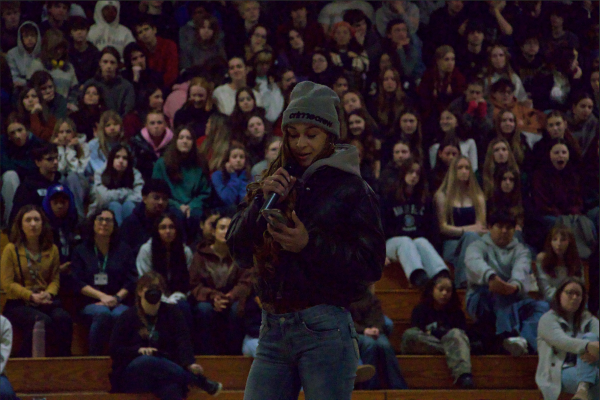
McCleave was a member of the name-change committee, which reestablished Wilson High School as Ida B. Wells-Barnett High School in 2021. “We are not erasing the past, but paving the way forward,” she said, referring to her time on the committee.
By sharing her story, McCleave gave students a glimpse of what their future selves could look like. “She’s a role model to all the Black students here right now, especially those who dream of doing something big. She’s a living example of that,” said Taylor.
McCleave urged students not to be passive in their lives. “Your story matters. Your curiosity matters,” she said.
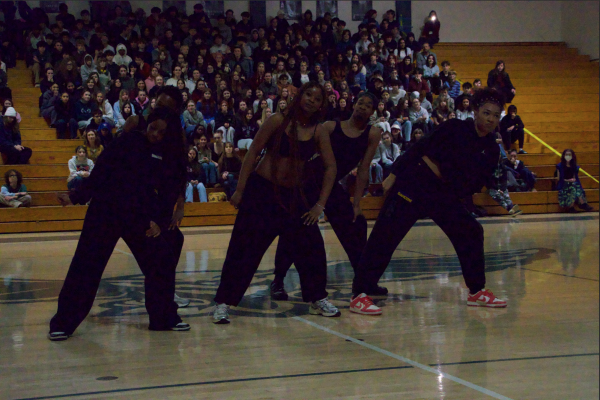
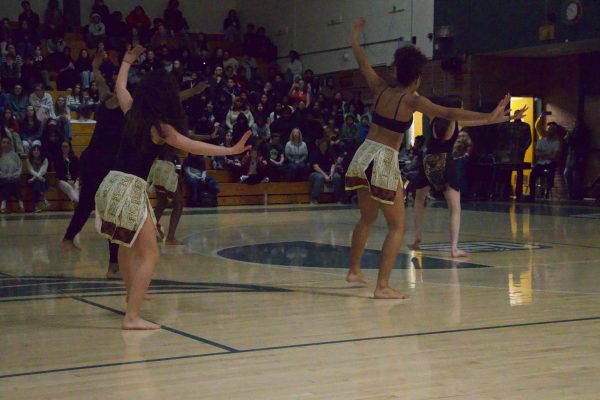
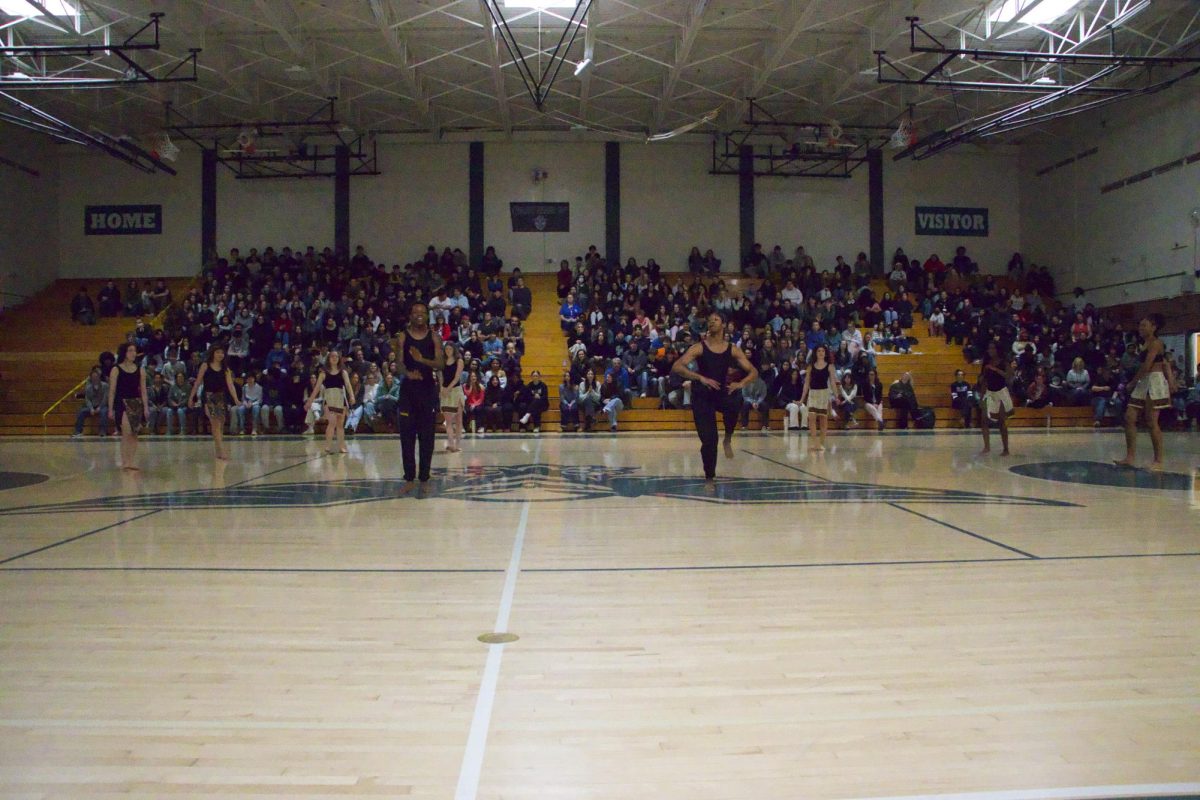
The Jefferson Dancers performed two pieces as the final event of the assembly, reminiscent of last year’s Black History Month assembly. The first was a hip-hop piece, while the second was based on a traditional African dance.
Students exited the gym to a sound bite of song honoring IBW’s namesake and community at the conclusion of the hour-long assembly. It was made by students in advanced sound engineering classes and featured choir singers from the Wells Advanced Vocal Ensemble.
BSU members hoped students left the assembly reflective and inspired to create change. McCleave’s final statement of her speech echoed this as well, along with the assembly’s theme of identity and pride.
“Happy Black History Month,” McCleave said.