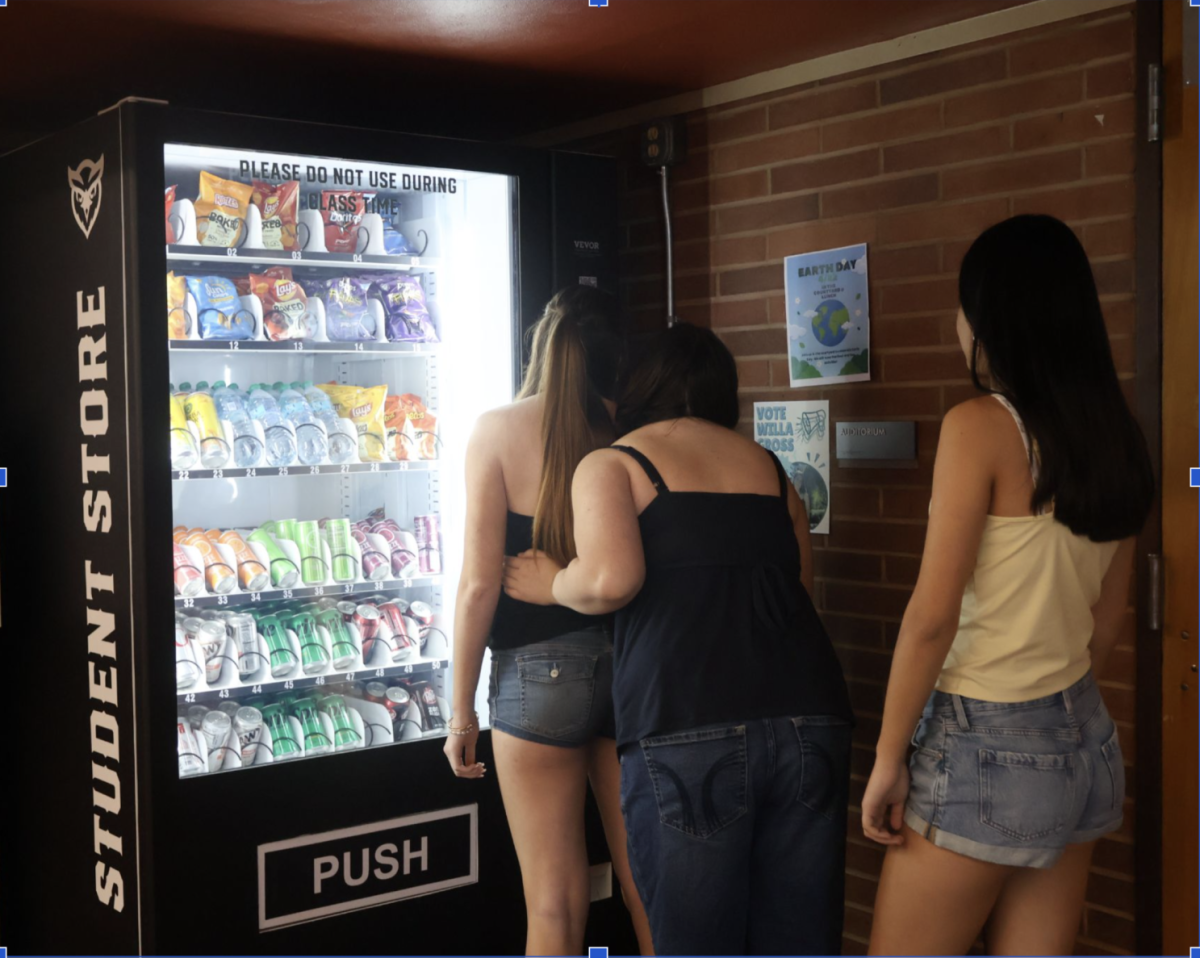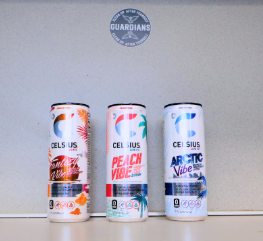
Over the last five years, the popularity of the ‘energy drink’ skyrocketed. At Ida B. Wells, every snack stop, Student Store and nearby food hotspots in Hillsdale have Red Bulls, Monster Energy and Celsius stocked. With bright colorful cans featuring buzzwords like ‘energizing,’ ‘metabolism-inducing’ or ‘flavorful’ plastered in bubble letters, it’s clear that the market knows how to catch people’s eyes.
Energy drink advertisement and consumption has become so widespread that students sipping on these colorful, caffeinated beverages can be spotted in almost every classroom at IBW. I guarantee you that if you were to ask any teacher at Ida B. Wells, the majority of the time, you could expect them to report seeing many energy drinks in their classroom at one point or another. For example, Kenneth Muroaka,(a business teacher who interacts with hundreds of students and head of Student Store at IBW), was more than qualified to give some insight. After the question of energy drink popularity was proposed, he promptly revealed, “I probably see one to three per class.” The interview progressed with some surprising information about the Portland Public School districts regulations around caffeine. To put it simply–there are none. “I can’t believe we can sell 200 milligrams of caffeine. [The only requirements are that drink(s)] have to be less than 15 calories and free (or low) of sugar. If it is, then we can sell it regardless of caffeine content,” says Muroka. “There are guidelines on caffeine for middle schools and lower. But at the high school level, the caffeine guideline lifts.”
From an outside perspective, since the school allows it, and kids love it; why not sell it?
In 2010, Michelle Obama began the “Healthy, Hunger-Free Kids Act.” A report from the USDA Food and Nutrition Service (FNS) states, “The Act will not only improve the nutrition quality of school meals, but will improve the entire nutrition environment in schools.” Since this act was put in place, only one other update was made. In July of 2025, the government finalized an update to the food requirements for school lunches that restricted sugar and sodium. Still, rules around caffeine consumption in schools were not included, and so far, no plan to regulate them in the future.
The results of any research are clear. Energy drinks have a chokehold on this generation. Delveinsight, [a well known market research company] says, “This growth [of energy drink sales] is fueled by several key trends and dynamics shaping consumer behavior and market trends. One prominent factor is the increasing demand for convenience and functionality in beverages. Energy drinks offer a quick boost of energy, often appealing to busy professionals, students, and athletes seeking performance enhancement or a pick-me-up during hectic schedules.” Energy drinks are an easy way to boost something that today’s society lacks – energy. With busy work schedules, teens in school all day, and extracurriculars, people tend to reach for an easy solution; willing to accept the inevitable risks and consequences.
But the question is, why?
Let’s unpack the “energy” piece of the puzzle. Most energy drinks, for instance Celsius and Red Bull, contain a few basic ingredients: sugar, artificial sweeteners, caffeine (often green tea), B vitamins and taurine.
You might wonder, what even are some of those ingredients? B vitamins, (like B6 and B12) aim to boost how fast you convert food into energy, thus increasing your energy and metabolism, both of which appeal greatly to consumers in a world where dieting and exercise are ingrained into our society. Taurine is also used to increase your metabolism and food processing since it is an amino acid that supports cardiovascular health.
Many of these ingredients do have side effects. For instance, taurine can cause heightened anxiety and hyperactivity. According to a report by the The National Institute of Health (NIH), “when 1% ethanol was added to taurine, [to mimic such in our metabolic systems and trace amounts in energy drinks] all concentrations prevented locomotion impairment and anxiety-like behavior. The main effect of taurine and ethanol is an anxiety-like response and exploration.” This consequence is shared with caffeine in general because caffeine works by blocking your adenosine receptors in your brain, that help your brain relax. When they are blocked, it can cause anxiety because your brain is more easily sent into a fight-or-flight response since it isn’t sure how to react. Taurine can also force your heart rate to rapidly increase, which can further heighten anxiety. Over time, this can cause a strain on your heart or even early heart failure.
The ingredients alone aren’t the only reason energy drinks sell, though. to find that, we can consider the million dollar marketing that is poured into our favorite drinks. According to the Wall Street Journal (WSJ), “[Celcius’s] declined to disclose how much it’s paying for the new campaign. But its ad spend has been climbing: Last year, it totaled $222 million, up from $160 million in 2023 and $85 million in 2022, according to its latest annual report.” Accounting for the fact that Celsius has seen a 173% increase in 2024’s profit growth compared to Q3 year over year, we can expect that 222 million spent on marketing to increase as well, says WSJ.
But don’t just dwell on Celsius. The arguably larger brand presence of Red Bull has climbed the capitalist mountain through marketing as well. Cascade Strategy says that Red Bull has an annual $3 billion marketing budget. They comment on Red Bull’s success as well, saying, “Red Bull has become a marketing powerhouse and one of the world’s most popular energy drinks with a unique history and a category-creating brand.” Though both Celsius and Red Bull have stark differences in their target audience (red bull focusing on athletes and pushing boundaries, celsius targeting gym enthusiasts and younger consumers) they both know how to reach and connect to their fans, a key to business.
Circling back to our original question, “why are energy drinks so popular and ingrained in society?” Just like any other trend, it typically stems from marketing and influence. When it comes down to it, energy drinks to an everyday consumer are cans of metabolism boosting and convenient alternative coffee. That’s what marketing is all about, appealing to a target audience. The claims are not proven false, they can certainly boost the feeling of being energized. There is also research to back up the positive benefits of focus. In a study done by the National Institute of Health, they found that caffeine alone improved reaction time, executive control, and working memory, while taurine’s effects were less consistent. This suggests that specific combinations of ingredients beyond caffeine might enhance cognitive function.” This shows that many consumers of energy drinks found improvement to focus and even certain instances of increased general cognitive function.
Overall, there absolutely are pros and cons to the energy drink, and the goal of this article is not to tell or warn consumers to stop drinking them. But always feel free to question any big marketing campaign before making a decision, especially one that claims to fix an inherently human problem.