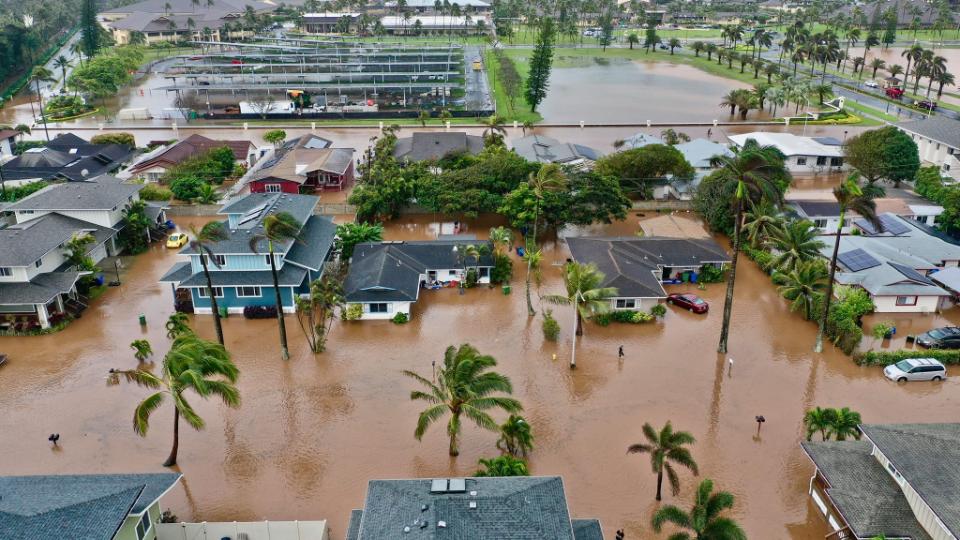
The Hawaiian islands of Oahu, Maui and Molokai faced devastating floods in mid March, and are still recovering from its effects. This severe flooding is caused by seasonal wind along with heavy back to back storms called “Kona Lows.” The storms began March 10, 2026, where the islands received five to ten inches of rain across them, and ended on March 23, 2026.
The University of Hawaii also says “the Hawaiʻi Mesonet, a statewide network of state-of-the-art weather stations, is proving to be a critical source of weather information, especially valuable during extreme events.”
The National Weather Service in Honolulu said Oahu received between 10 to 14 inches of rain overnight from March 19 to 20 and even more rainfall over the following weekend.
These floods led to mass devastation across the island. People were forced to flee their homes and their belongings were destroyed.
Though there are no reported fatalities, emergency responders rescued more than 230 people. Additionally, over 5,000 people were evacuated from Oahu’s North Shore, one of the hardest-hit areas.
Hawaii’s governor, Josh Green, said to the New York Times on March 24 that the flooding across Hawaii was the worst the state had seen in 20 years. He anticipates that storm damage across the islands could cost “more than $1 billion in public and private property damage.”
According to the University of Hawaii, “more than 2 trillion gallons of water—enough to fill 3 million Olympic-sized swimming pools—inundated Hawaiʻi in March. The accumulated rainfall over 14 days reached as high as 3,000% of normal historical levels for this time of year, culminating in a destructive ‘rain bomb’ over Oʻahu.”
Despite the extreme weather in March, the continuation of tourism to Hawaii was encouraged by Green. All airports and most overnight accommodations, restaurants and visitor attractions across the state are now operating as usual.
Local businesses in Hawaii are heavily dependent on tourism, which acts as a big contributor of the state’s economy, bringing roughly 25% of the total GDP and billions in annual visitor spending. A significant portion of jobs, especially in retail, restaurants and hospitality, rely on tourism dollars.
According to KOHN2, residents are still struggling. Kalei Gamiao, a Waialua resident, said “This is the third time we’re doing this. This flood was more significant than before.”
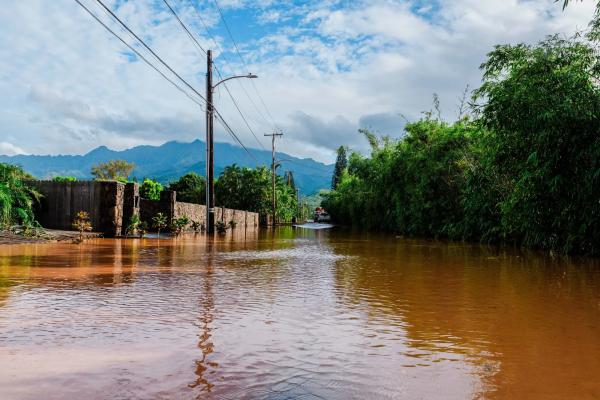
Gamiao said while their family is making progress and recently got power restored, others in the community are still struggling, with some homes left untouched weeks after the storm.
“It’s been really sad… some places haven’t even been cleaned yet,” he said.
Hawaii residents are still slowly recovering from the disaster, but according to earth.org, “home rebuilding and vehicle replacement for heavily impacted families will take several months.”