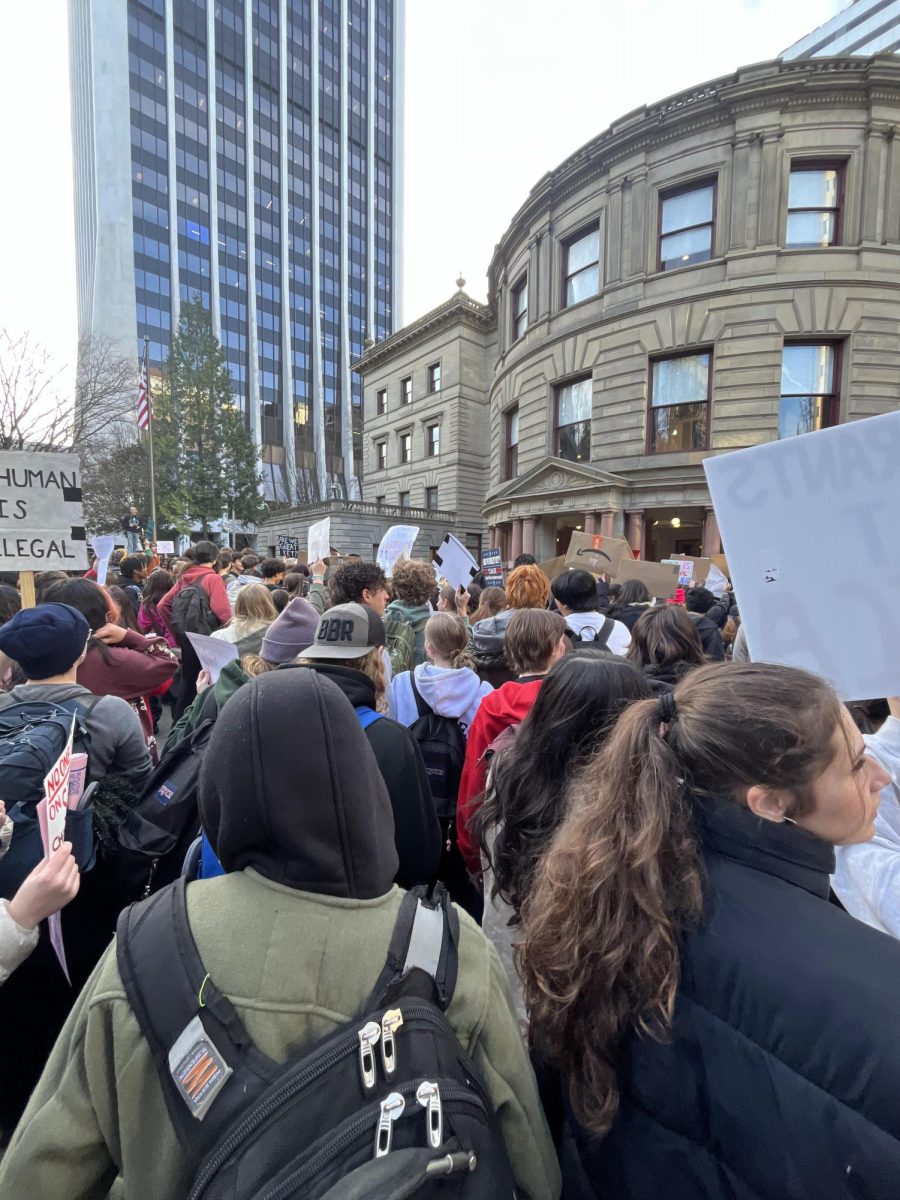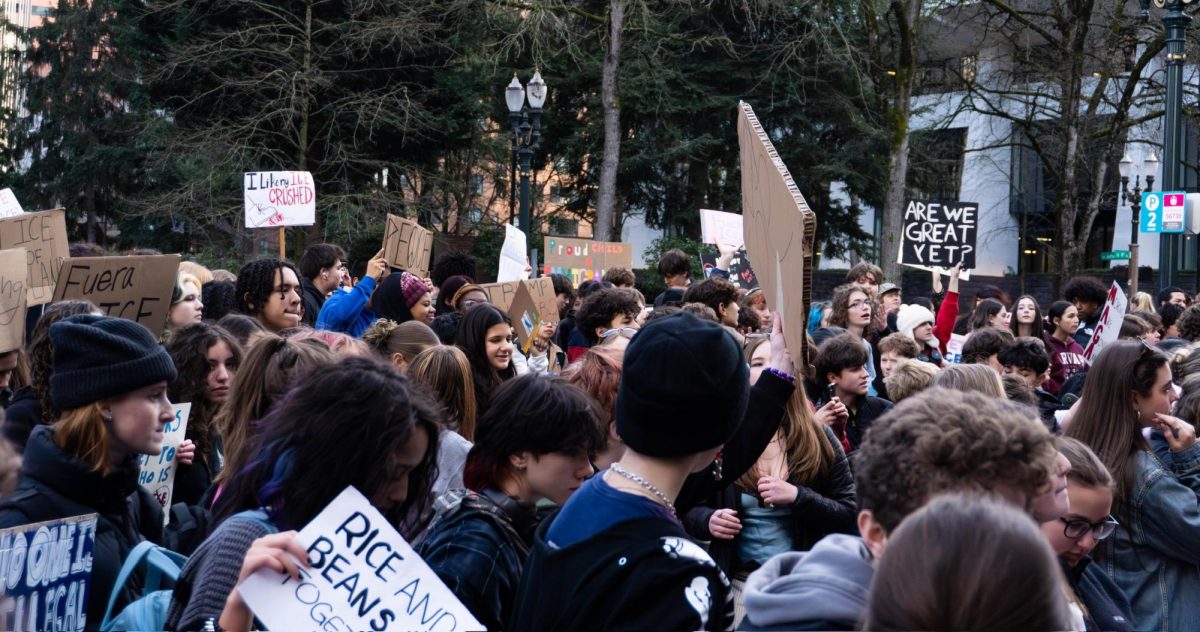
In recent months, reports of Immigration and Customs Enforcement (ICE) activity in Minneapolis have sparked concern, confusion and debate across the country. These enforcement actions have raised questions about public safety, due process and the relationship between immigrant communities and local institutions. As Minneapolis continues to define its identity as a welcoming city, ICE’s presence has become a focal point, highlighting the tension between federal immigration policies and local values.
On Dec. 1, 2025, many federal ICE and U.S. Customs and Border Protection (CBP) agents were deployed to Minneapolis, Minnesota. They were sent for an operation targeting individuals with deportation orders. Numerous large-scale immigration raids and arrests were made all across Minneapolis.
While many illegal immigrants were detained, a great number of arrests consisted of legal U.S. citizens. The arrests and raids were met with protests, and many people started documenting what ICE has been doing in Minneapolis for others to see online.
Dec. 12, the Department of Homeland Security (DHS) reported that ICE has detained numerous Somali, Latino and Southeast Asians who ICE claimed have criminal backgrounds. As ICE continued to arrest U.S. citizens (later releasing them), protests in Minneapolis increased rapidly by late December. On Jan. 5, 2026, DHS sent 2,000 federal agents to Minneapolis for what they said was the largest immigration operation ever.
On Jan. 7, an ICE agent shot and killed 37-year-old Renée Nicole Good, a Minneapolis resident, mother of three and U.S. citizen. Officials claim that Good was trying to run over an agent with her car, but video evidence and eyewitnesses prove otherwise. That same day, the mayor of Minneapolis, Jacob Frey, spoke about how ICE agents need to leave the city immediately and that Minneapolis stands and gives full support to its immigrants (City of Minneapolis).
On Jan. 8, Vice President, J.D. Vance spoke about Good’s death during a press conference at the White House. He stated the public should be thanking the ICE agent who shot her and that her death “was a tragedy in her own making.” He continues talking about the agent saying, “this is a guy who’s actually done a very, very, important job for the United States of America.” This incident sparked widespread outrage and protests all across the U.S.
“I think in Minneapolis, what ICE is doing there is shining a major spotlight on true injustice, violence, and hate that people have always known was there,” said Max Trezise, a history teacher at Ida B. Wells. He goes on to say, “As a history teacher, what scares me the most is the fact that the teaching of fascism has been around for a long time, and we as a society have agreed that it is wrong. I don’t understand why suddenly so many people seemingly support all this fascism in the U.S. and even abroad.”
The state of Minnesota and cities of Minneapolis and St.Paul filed a federal lawsuit against CBP, ICE, and DHS on Jan. 12, 2026, asking to end the operation.
On Jan. 23, 2026, around 50,000 people gathered in downtown Minneapolis for an “ICE Out” protest. On the next day, the second murder by ICE happened. Alex Jeffrey Pretti, a 37-year-old ICU nurse and U.S. citizen, was shot by an ICE agent. During the events, Pretti appeared to be filming ICE agents who had detained a person to the ground. Pretti walked closer as an ICE agent pushed down civilians. He tried to help them up, but the agent pepper-sprayed them while other agents came and tackled Pretti. He was surrounded by numerous agents as he continued to get sprayed. One agent grabbed Pretti’s gun and took it away from the scene while another reached for his own gun and shot four close-range rounds at Pretti. Two more agents fired an additional six shots at Pretti while he was motionless on the ground.
ICE later stated that Pretti was taking out a gun, and the shots were self-defense. Many videos online quickly debunk that and show that Pretti had a phone in his hand, filming and trying to help the civilians who were pushed around by ICE. Also, by the laws of Minnesota, Pretti, who is a citizen, could legally carry a firearm in public with a permit. Despite that, during the altercation an agent already removed Pretti’s gun off of him and away from the scene, leaving him defenseless.
An article in The New York Times called “Timeline: A Moment by Moment Look at the Shooting of Alex Pretti” stated that the Governor of Minnesota, Tim Walz, a Democrat, accused powerful people in the federal government of spinning stories about Pretti’s death. Along with what happened with Good, local police in Minnesota have been hindered from investigating the death and cut off from crucial evidence and facts. The next day, 1,000 people crowded Government Plaza in downtown Minneapolis to protest for justice to Good and Pretti.
Frank Mathews, a history teacher at IBW, said about ICE, “the tone of it all is very much authoritarian, which is not something that coincides with the philosophy of what the U.S. is supposed to be about. The U.S. is supposed to be about individual freedoms, liberties, and protection from the government. Well, here the government is being very authoritative, and in my view, overstepping the bounds we’ve had with immigration policies for the last few years they’ve been enforced. To me, there’s no reason why we have to go out of our way to find and use violence against people. I believe that there are human rights first and then nation-states. This seems to be quite obviously a reach beyond the scope of what governments should be able to do.”
On Feb. 4, 2026, Tom Homan, who oversees border control, said that 700 federal agents will be removed from Minnesota due to the “amazing cooperation” from locals. That leaves about 2,000 agents deployed in Minneapolis in the largest immigration operation to date.
As ICE continues to operate within Minneapolis, the effects of their action goes beyond arrests. Impacts from ICE are felt locally, shaping how citizens interact with public spaces or institutions. It continues to raise questions on enforcement practices, and as residents and officials respond, the issue highlights the need for communication and accountability. How these concerns are addressed will influence both public trust and the city’s sense of safety.