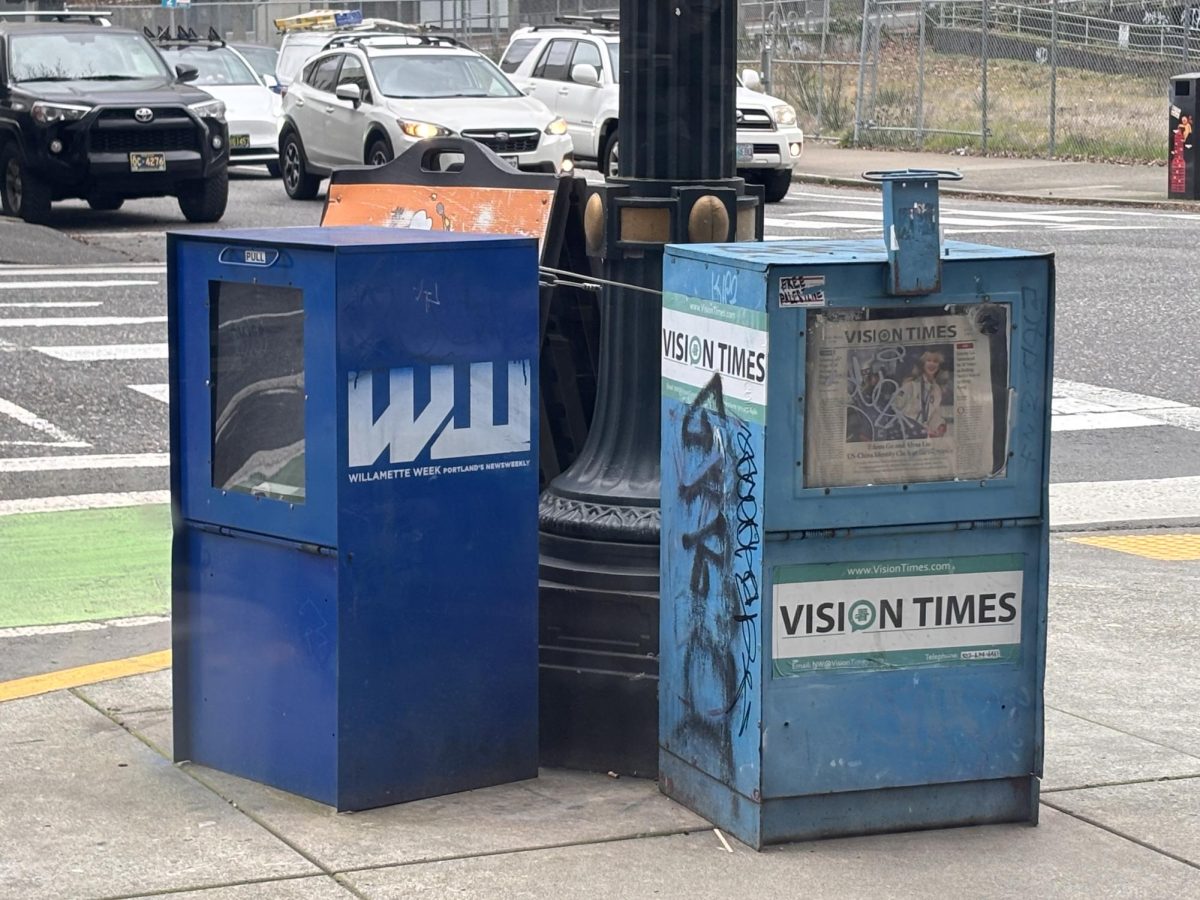
Storytelling has been an essential part of civilization since the beginning of humankind. From 15,000-year-old cave paintings to the modern New York Times website, staying informed has proven beneficial to human safety, intelligence and well-being.
However, in a time of constant technological advancements, interest in the news is on a steep decline. The Pew Research Center reports that only 36% of adults regularly read the news, and the number is shrinking.
This global issue has forced journalists, globally, to come to a striking conclusion: people aren’t reading the news because they don’t trust the press.
That’s right, it’s not just because teenagers are more interested in Snapchat. Gallup reports a record-breaking low trust in media, declining from a 72% peak in 1976 to 28% across all political parties in 2025. In some states and political parties in particular, this statistic drops to single digits, such as the Republican Party, in which only 8% of people feel that they can trust the news.
Key reasons for this decline in trust can be attributed to misinformation and disinformation in the media. Misinformation refers to inaccurate information reported by mistake. Now that media is click-driven, and journalists are rushing to pump reporting out fast, misinformation is harder for fact-checkers to catch before publication. The good news is that digital publication makes these mistakes easier to correct, with some publications indicating that an article has been updated since publication.
But that doesn’t do much for disinformation.
Disinformation refers to inaccurate information reported purposely, and is often used to convince someone of a specific point of view. When readers see a strong headline with a shocking statistic, they’re inclined to click on the article, and that “click” generates revenue for the writers.
While it’s important to produce headlines that pique reader interest, it’s deceitful and unjournalistic to publish information knowing it is false. When readers feel they are being lied to for their attention most of the time, it leads to mistrust, even when it is authentic information they need to hear.
Another issue occurs when some journalists produce biased pieces. According to the Pew Research Center, 57% of U.S. adults express low confidence that journalists act in the best interests of the public.
Political polarization and business model pressures are highly focused on emphasizing engaging news to make it appeal to certain audiences, losing public trust in the process. A good journalist maintains an unbiased opinion, and creates rifts with the public when they feel that a news source is blatantly pushing a certain political perspective upon them.
Furthermore, with the addition of paywalls on digital news sites, there is less motivation to access news online. Running a newspaper has never been cheap, and newspapers have historically charged money to cover print expenses and pay for their editors. But, by making popular news websites inaccessible to those who don’t pay a subscription, writers turn away from the public to only reach a wealthier population, further accentuating the divide between the writer and the reader.
In addition to inaccessibility, the drive to read the news has declined because people are tired and overworked. While technological advancements, such as smartphones are revolutionizing technological growth, inventions like social media have introduced unprecedented stressors and tasks into people’s lives. With these new social obligations, people have less time to spend catching up on what’s going on outside of their communities.
Another reason people have less drive to read the news today is how depressing the news can be. With events like mass deportations in the U.S., international conflicts and bloody wars, the news isn’t exactly uplifting, making it hard to take time out of their busy days to visit something that, instead of creating hope, creates disappointment and fear.
When information feels biased and every headline feels like bad news, it can be especially hard to trust journalists. Yet especially today, trusted journalism becomes more important than ever to keep people informed and knowledgeable about the ever-changing world around them.
Whether it’s through social media or the good, old-fashioned paper, keep reading, share news with others and stay in the loop.